

ALBUM REVIEW
DIE KAMMER – Season VI: We Destroy What We Love
Positive melancholy balances darkness with elegance.
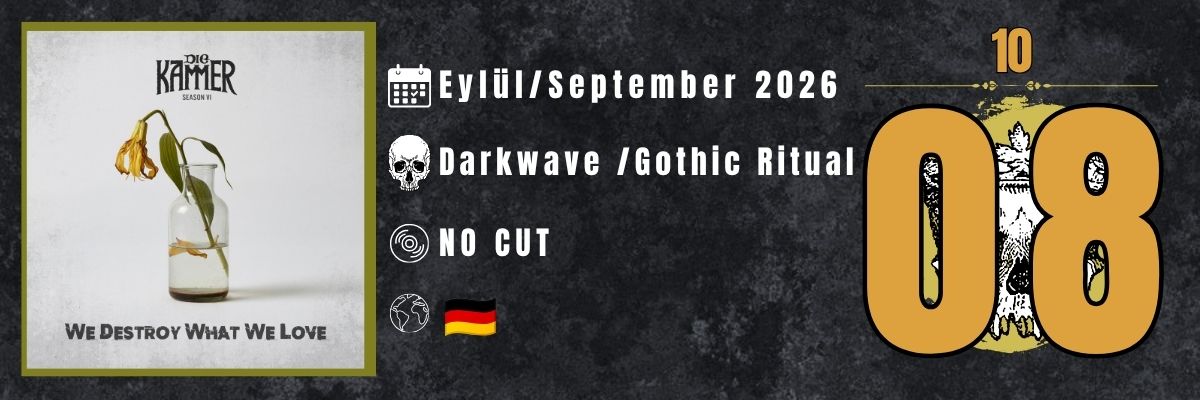
Darkness in DIE KAMMER’s music never remains merely a simple extreme-music theme. The duo formed by Marcus Testory and Matthias Ambré has expanded its original Gothic orientation with electronic textures over time, and on "Season VI: We Destroy What We Love", this approach is placed within a more stripped-down, semi-acoustic and intimate framework. The restrained use of loops and synths alongside Pop, Dark Wave and Alternative elements fills the spaces in the songs rather than overshadowing them. The function of these electronic layers is not to create density, but to open up a broader, more contemporary space around the melodies.
That is why there is a distinct tension beneath the album’s seemingly light surface. DIE KAMMER hold catchy melodies and danceable rhythms alongside weighty emotional themes within the same compositions. "Sweet Uncertainty" represents the more accessible side of this approach, while the song’s focus on youthful exuberance and the unpredictability of life complements rather than contradicts the music’s melancholic character. The sadness here does not turn inward; it takes on a form that can move, and at times even dance.
At the heart of the album, "We Destroy What We Love" reveals the darker side of this approach. The song is built around the idea that, in trying to protect the things we value, we can also end up destroying them. Images such as a flower wilting in a vase after being cut, a free bird being locked in a cage, or love becoming suffocating turn this paradox from an abstract idea into something rooted in everyday behavior. The destruction at the heart of the album’s title can therefore be read not simply as a dramatic image of darkness, but through the blurring boundary between love and possession.
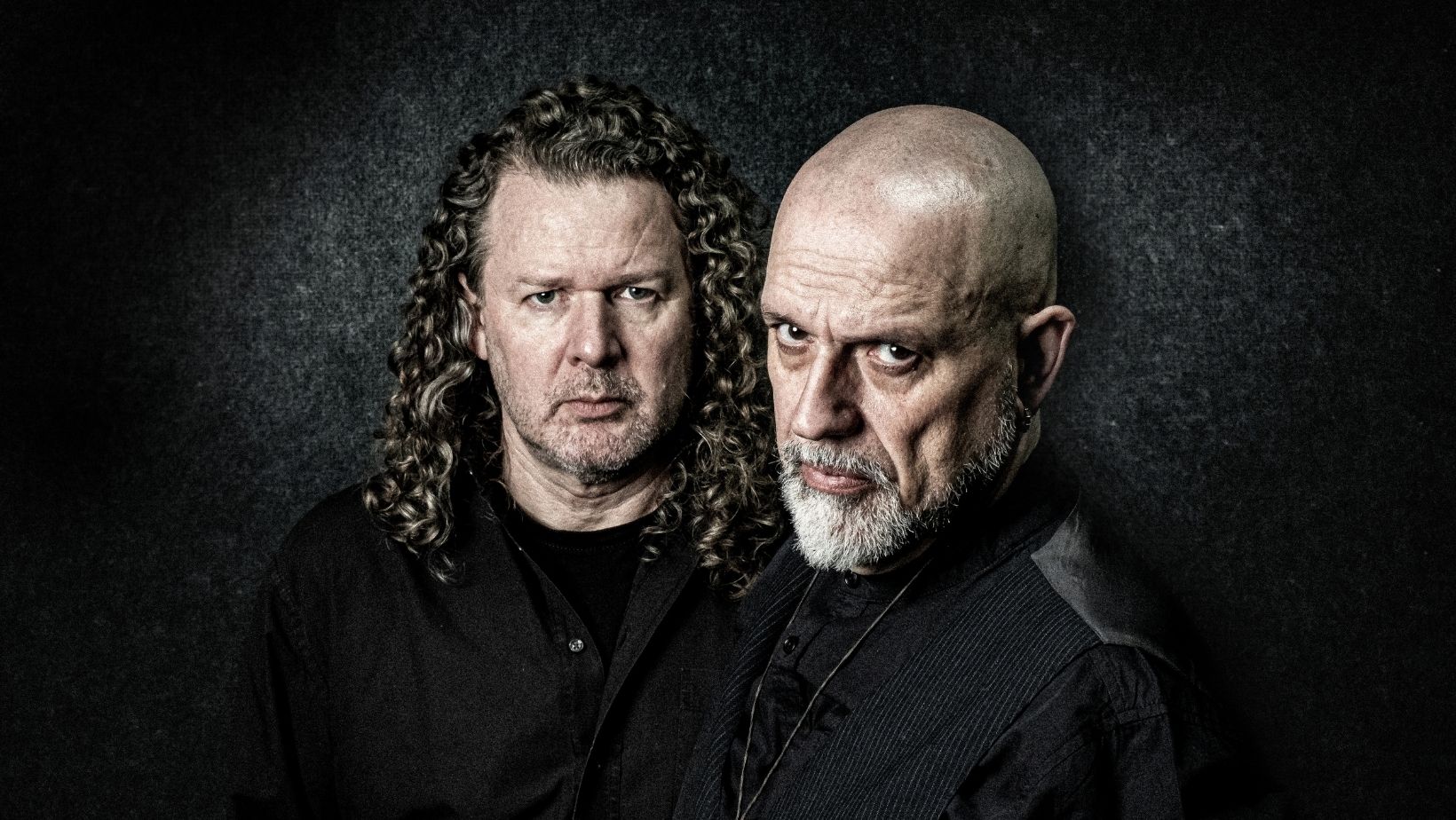
Photo by: Fotokatz
"The Fall of the Sun" and "Poisoned River" carry the heavier side of the same world. In particular, the way "The Fall of the Sun" approaches death and decay through an erotic aesthetic keeps DIE KAMMER’s melancholy from becoming a simple expression of sadness. What these songs share is their ability to create another emotional space in opposition to despair rather than constantly intensifying it. This is where the band’s notion of "positive melancholy" truly comes into focus: sadness is not removed, but neither is it expected to produce nothing but pessimism.
Restraint in the arrangements is crucial to this musical approach. Rather than constantly filling the sonic space, "Season VI: We Destroy What We Love" makes use of the gaps left by its semi-acoustic structures. The guitars establish the basic texture, while bass, loops and synth elements broaden the music without turning it into an electronic spectacle. The vocals, meanwhile, function as a dramatic focal point above these arrangements. As a result, the dark atmosphere in DIE KAMMER’s music is built not through excessive distortion or dense instrumentation, but through melodic simplicity and controlled arrangements.
This simplicity also creates a clear balance between the album’s accessibility and its artistic seriousness. Its references to the dark pop aesthetic associated with the likes of Depeche Mode and Ultravox in the 1980s do not simply surrender to nostalgia; electronic textures are combined with a more organic, inward-looking approach to songwriting. Tracks such as "My Muse Is A Succubus" further strengthen this melodic sensibility. The chorus in particular, with its repetition-driven structure, makes the song one of the more immediately memorable moments on the album.
"Season VI: We Destroy What We Love" therefore operates less through grand gestures than through controlled contrasts. Lightness and sadness, danceability and darkness, love and destruction, surrender and the desire to live are held within the same aesthetic space. The band’s achievement lies in placing these oppositions side by side without turning them into artificial melodrama. The album’s minimalist approach also goes beyond being a purely formal choice; it creates a musical space suited to the fragility of the emotions it seeks to convey.
"Season VI: We Destroy What We Love" finds DIE KAMMER establishing a more restrained balance between Pop, Dark Wave and Alternative without completely abandoning the band’s Gothic roots. Its controlled use of electronic elements, accessible melodic structures and recurring melancholic atmosphere give the album a coherent identity. More interestingly, though, this music does not present darkness as a dead end. Here, sadness is not the opposite of life, but an emotion capable of existing alongside it. At this point, DIE KAMMER’s concept of "positive melancholy" ceases to be a slogan and becomes the album’s musical logic.

DIE KAMMER
Official Web Site · Facebook · Instagram · YouTube · Spotify