
Album Review
DIMINISHING – The Outcome
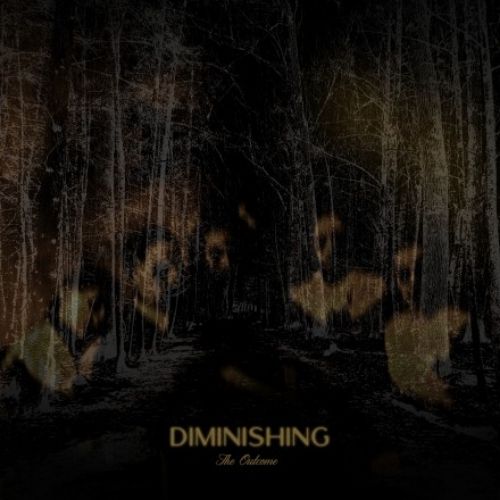
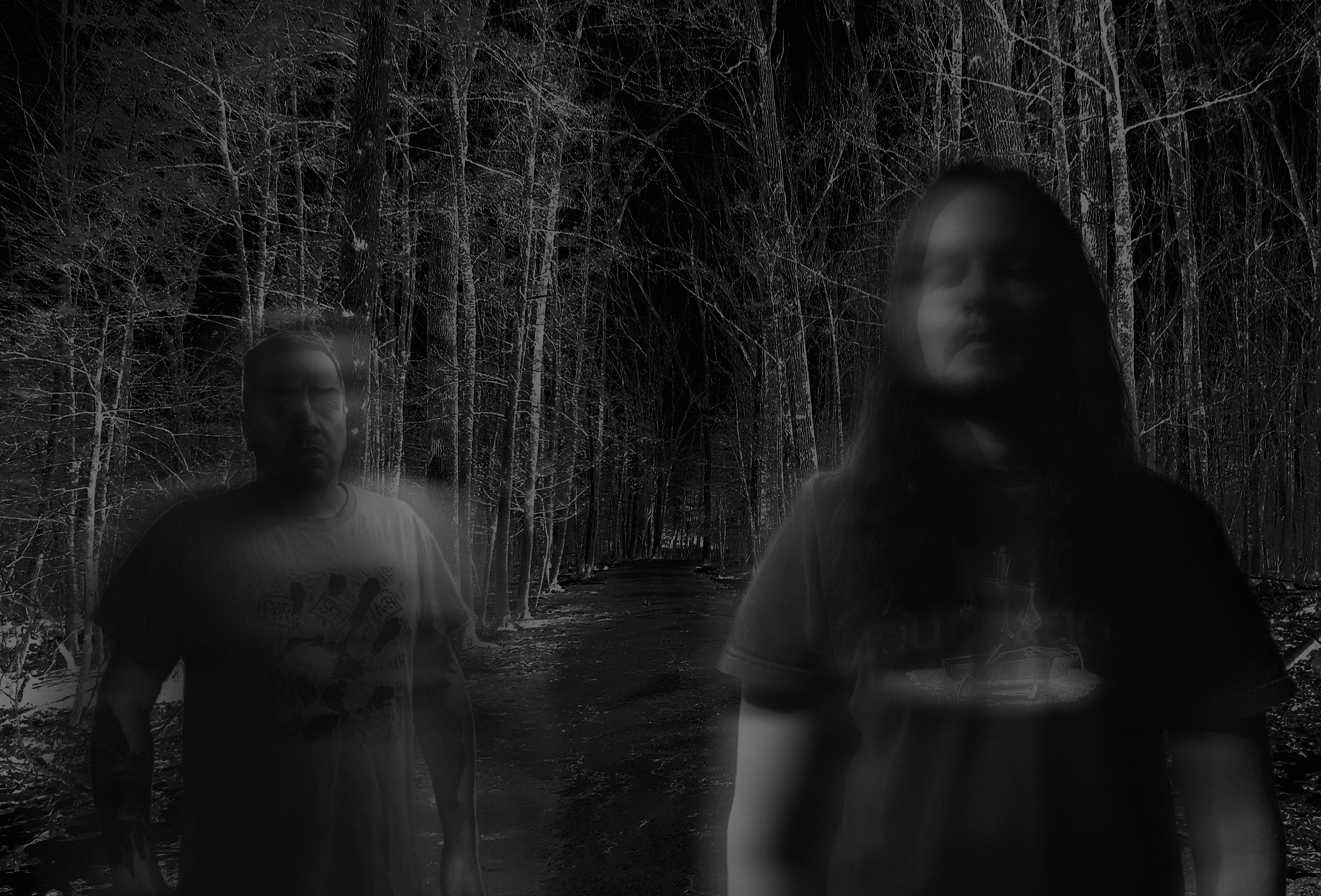
New York/Texas-based duo DIMINISHING is preparing to release its second album, The Outcome, on May 26. Formed in 2019 by Lane Oliver (ex-Yatsu, Feel Happiness) and David Brenner (Gridfailure), DIMINISHING released its unsettling debut album The Unnamable through Anti-Corp in 2023.
The structural logic of The Outcome relies less on traditional riff progression than on a dual-guitar drone recorded during a single improvisational session and recontextualized over the years. What defines the opening material is not harmonic movement, but overlapping guitar interaction that almost never resolves into clear chord centers, instead maintaining a narrow and abrasive harmonic field. The production leaves this material relatively exposed, allowing the raw interaction between the two guitars to become the primary organizing axis, while every other element is positioned either to reinforce or erode that axis.
Throughout the 24-minute flow divided into four sections—which function less like separate compositions and more like shifts in internal pressure—the guitars never abandon the drone foundation. Instead, they intensify through layers accumulated over years and through textural intervention. Fleeting melodic fragments and occasional post-rock-style voicings do emerge, yet they are constantly pulled back into the same narrow frequency band. As a result, these melodic gestures never produce a new thematic structure; they either collapse back into sustained resonance or dissolve into noise almost as soon as they appear. When chromatic movement surfaces, it functions less as progression than as destabilization, preventing the drone from settling into a fixed tonal identity.
The rhythmic layer occupies a deliberately secondary yet structurally effective position. Rather than relying on conventional drumming, the record leans on mechanical rhythmic articulations and processed pulse elements that resemble degraded loop structures. These never lock into a consistent groove; instead, they emerge in fragmented form and frequently remain slightly misaligned with the guitar sustain. In practice, this creates constant friction between the continuity of the drone and the discontinuity of rhythmic interruption. While the guitars impose continuity through sustain, the rhythm layer intervenes without constructing a corresponding groove, and that structural imbalance is preserved throughout the piece.
It would be inaccurate to describe the vocal presence as sparse, yet their position within the mix is clearly defined: rather than functioning as a narrative foreground above the instrumentation, they operate more like an additional distortion layer occupying the midrange. The vocal approach leans toward harsh delivery, but much of the articulation has been processed and flattened, pulling the vocals into the same density field as the guitars and synth textures. Rather than marking transitions, they appear and disappear like temporary disruptions that briefly increase the textural density.
The synth and effects layer plays a crucial role in binding together the record’s long-form structure. Rather than creating distinct atmospheric “sections,” it functions as a continuous spectral fill, occupying the spaces left by the guitar sustain while introducing low-level instability through noise modulation and tonal smearing. At certain moments, the synth textures alter the perceived depth of the mix, either pulling the guitars closer into a more abrasive immediacy or pushing them further back into a more reverb-heavy and diffuse plane. This constant spatial repositioning becomes one of the few consistent forms of movement observable throughout the piece.
What becomes structurally significant about the material is its preference for prolonged exposure over development. Even the transitions between the four internal segments are not defined through traditional structural markers such as tempo shifts or riff changes. Instead, they are signaled through gradual rebalancing of texture: subtle increases in noise density, changes in compression behavior, or the repositioning of the drone against the mechanical rhythmic layer. The continuity of the original improvisational guitar session remains perceptible throughout, functioning as a constant reference point for every subsequent addition.
In the later sections of the record, interaction is no longer defined through the instruments or vocals themselves, but through saturation. The guitars no longer register as a dual performance, instead resembling a single expanded field of resonance; rhythmic elements become increasingly absorbed into that field, while the synth and vocal layers operate merely as pressure fluctuations within the existing spectral density. The resulting structure creates a listening environment where progression occurs not through linear development, but through the continual redistribution of density.
The listening logic imposed by The Outcome is built around prolonged confrontation with a fixed sonic object that never resolves through conventional development. The record evolves not by introducing new material, but by continuously reprocessing the same foundational drone through layering, spatial repositioning, and textural intervention. Attention is pulled away from the question of “what comes next” and redirected toward how long a single harmonic and timbral state can be sustained while still undergoing perceptible internal change.
If you like the sound of bands like Sunn O))), Nine Inch Nails, Swans, etc., then this record is for you.
OZY