
Album Review
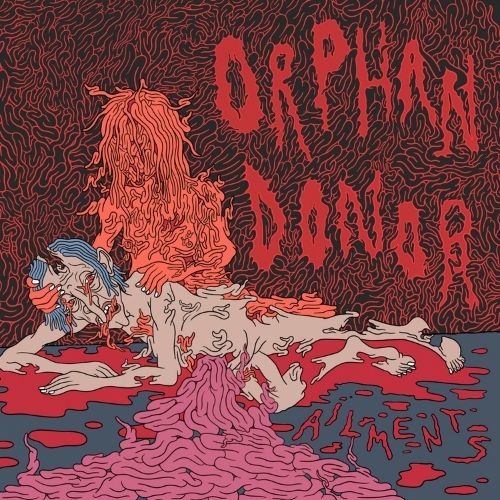
ORPHAN DONOR – Ailments
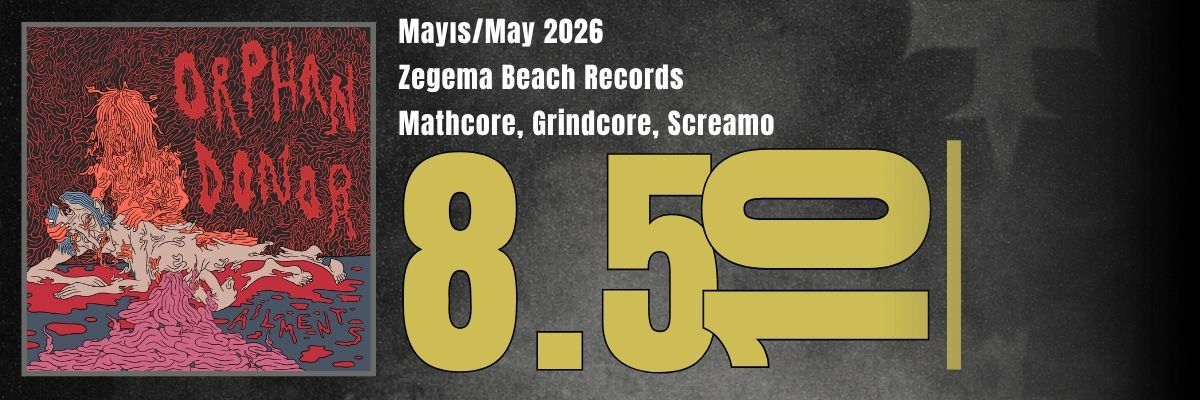
Allentown, Pennsylvania-based ORPHAN DONOR continues to pose a threat to auditory health with their noncompliant EP Ailments, released on May 11th through Zegema Beach Records.
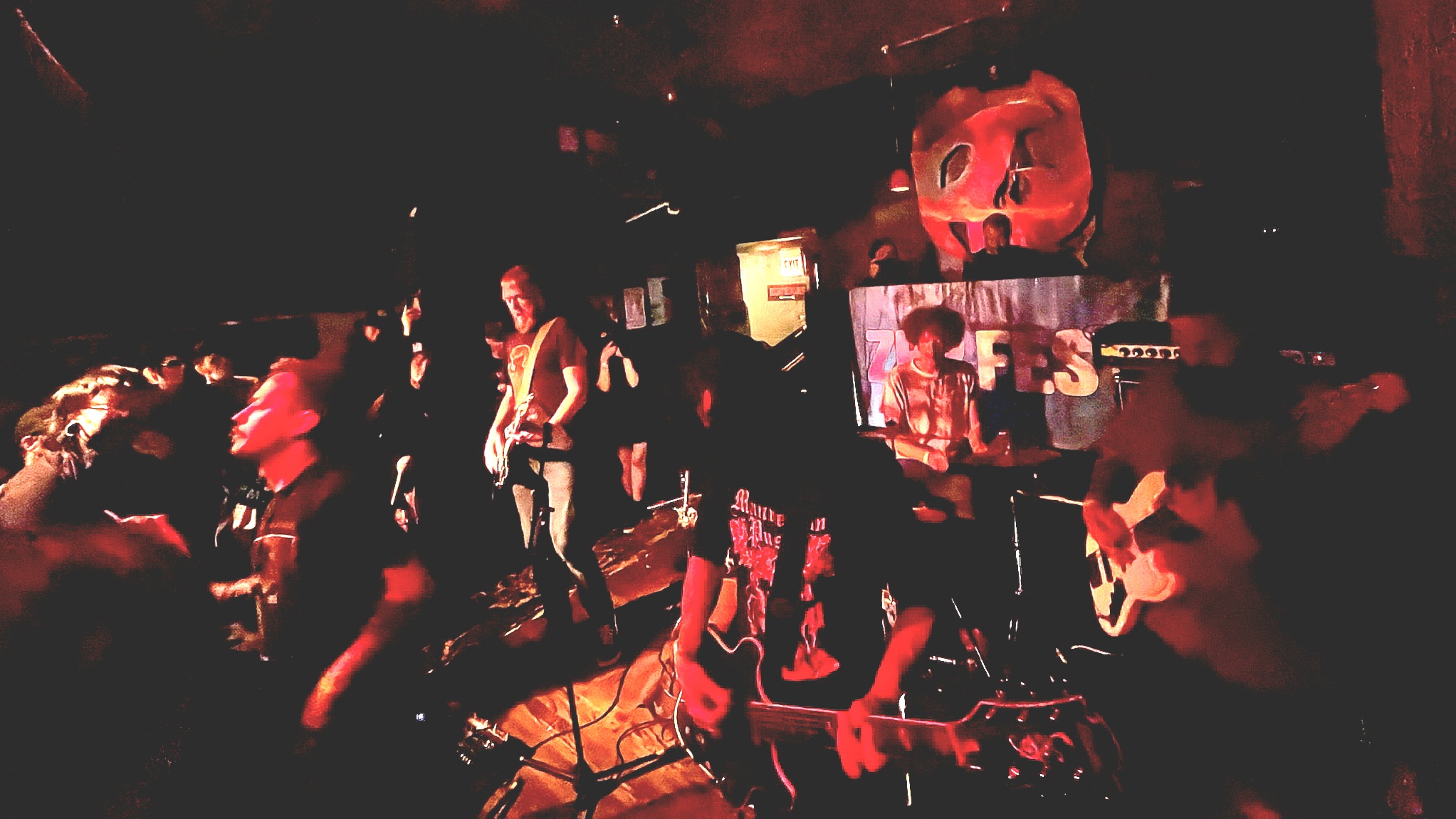
Throughout Ailments, the material almost never wants to remain in a stable rhythmic identity long enough to establish any kind of traditional momentum. The riffs arrive as short, fragmented cells, but the structure is constantly rerouted through sudden drum fractures, panic-speed blast beats, and violent transitions. ORPHAN DONOR builds tension not by escalation, but by interruption. Even when a groove begins to emerge, Jared Stimpfl’s dense fill work and abrupt tempo shifts drag the songs away from recognizable resolution points; just as the structure starts to settle, it collapses again.
The guitars operate with a similarly unstable logic. Rather than building the songs around memorable recurring motifs, the EP leans on clipped dissonant shapes, chromatic descents, and short riff fragments that constantly mutate. These riffs often function more like percussive strikes than harmonic anchors. Across the EP, the interaction between the two guitars becomes increasingly crucial because the arrangements rarely remain attached to synchronized force for very long. One guitar sustains abrasive chord tension while the other cuts through the structure with angular rhythmic stabs or dissolving tremolo figures. The result is a constant sense of internal conflict embedded directly into the riff architecture.
That instability becomes even more pronounced because the bass is not mixed like a purely supportive low-end layer. Ed Lewis frequently locks into the rhythmic violence of the drums rather than the harmonic direction of the guitars. This gives the music a persistent sense of physical forward motion even as the riff structures themselves begin to disintegrate. In practice, this decision prevents the songs from feeling “chaotic” in the loose sense of the word. The disorder here is highly controlled; while the rhythm section continuously reestablishes momentum, the guitars sabotage any sense of structural certainty.
Kevin Morris’ presence significantly alters the band’s overall behavior. The trumpet does not function like decorative texture added on top for atmosphere. Instead, it behaves more like a hostile intervention injected directly into transition sections that are already rhythmically destabilized. Because the trumpet occupies the same frequency space as the guitars’ upper-register dissonance and the abrasive vocal layers, it makes the mix feel even more claustrophobic rather than expansive. The resulting effect is less cinematic than suffocating. Arthur Rizk’s mastering leaves enough separation for the colliding layers to remain audible, but the record deliberately avoids creating clean space. Cymbals bleed into guitar noise, vocal layers intertwine with snare impacts, and many transitions feel intentionally overcompressed.
Vocally, the EP avoids relying on a single dominant approach. Chris Pandolfo’s higher-pitched screams remain in constant friction with Morris’ deeper, harsher vocal delivery. This layered attack directly mirrors the instrumental instability underneath. What matters here is not simply variation, but placement. The vocals are often pushed directly into the center of the rhythmic turbulence; rather than functioning like a narrator hovering above the material, they feel physically trapped inside the arrangement itself. This approach becomes especially effective during the faster passages, where fragmented syllabic phrasing starts functioning almost like an additional rhythmic component alongside the blast-beat patterns and collapsing riff cycles.
At under eighteen minutes, Ailments allows absolutely no structural excess. Transitions become the primary compositional tool here. Sections collapse into one another without warning, tempo changes arrive before earlier motifs fully settle in, and breakdown-adjacent passages deliberately refuse to repeat long enough to create genuine release. What emerges is a structure that constantly redirects listener expectation not through technical exhibitionism, but through arrangement logic. As extreme as the musicianship becomes, the EP’s defining trait is its conscious refusal of stability across nearly every structural level.
As a listening experience, Ailments demands active engagement with rhythmic and spatial relationships rather than emotional immersion. The album constantly redirects attention toward specific points of conflict: drums disrupting riff continuity, vocals further compressing already crowded frequency space, trumpet lines contaminating the harmonic field, guitars repeatedly denying tonal resolution. ORPHAN DONOR is not operating like a band attempting to overwhelm purely through density. The strength of the EP comes from how deliberately constructed this instability is; every abrupt rupture and collapsing structure reinforces the sense that the music consciously refuses to settle into fixed form. In this context, “Lampmaster” and “Show Me the Way” stand out as the record’s defining moments.
This record is tailor-made for extreme metal listeners with a deep appreciation for bands like The Dillinger Escape Plan and Neil Perry.
OZY