
ALBUM REVIEW
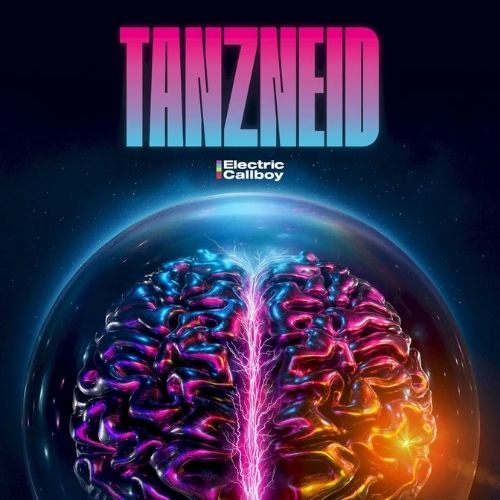
ELECTRIC CALLBOY - Tanzneid
Diverse, energetic, but increasingly predictable.
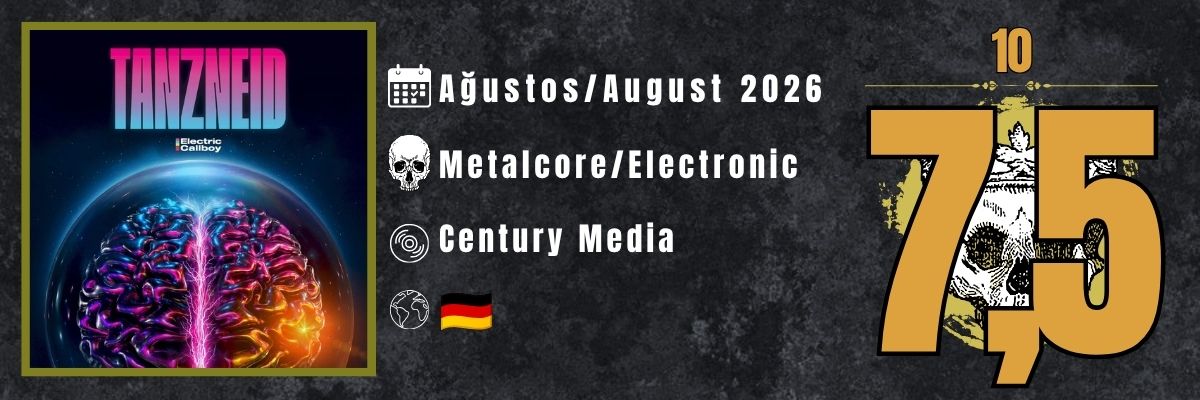
ELECTRIC CALLBOY are one of the bands that have taken their own formula beyond the stage by combining the heaviness of metalcore with the rhythmic structures of techno, pop, and dance music. The distinctive framework they established with “TEKKNO” not only brought them visibility beyond the metal scene, but also created a new set of expectations. “Tanzneid” arrives precisely at this point, as an album that is less concerned with proving what the band can do than with testing how far they can expand their established formula.
The fundamental move ELECTRIC CALLBOY make with “Tanzneid” is not to abandon the formula of “TEKKNO”, but to move it into a broader playing field. Electronic foundations, metalcore breakdowns, pop melodies, punk-rock touches, and the rhythmic language of dance music remain parts of the same compositional framework. This time, however, the question is less about how unusual these elements are and more about what new results they can produce within an ELECTRIC CALLBOY formula that has already become instantly recognizable. This is precisely where “Tanzneid” becomes both a strong and problematic album.
A significant portion of the album that arrives four years after “TEKKNO” is, in fact, not new. Songs such as “RATATATA”, “Let The Good Times Roll”, “Still Waiting”, “The Way You Are”, “Elevator Operator”, and the title track have already been part of the band’s live repertoire or digital circulation for quite some time. As a result, “Tanzneid” does not create the sense of discovering a new album in the traditional sense. The fact that the tracks were released at different points inevitably loosens the album’s cohesion as well. There is a shared sonic aesthetic, but no clearly defined backbone holding all the songs together under a single compositional idea.
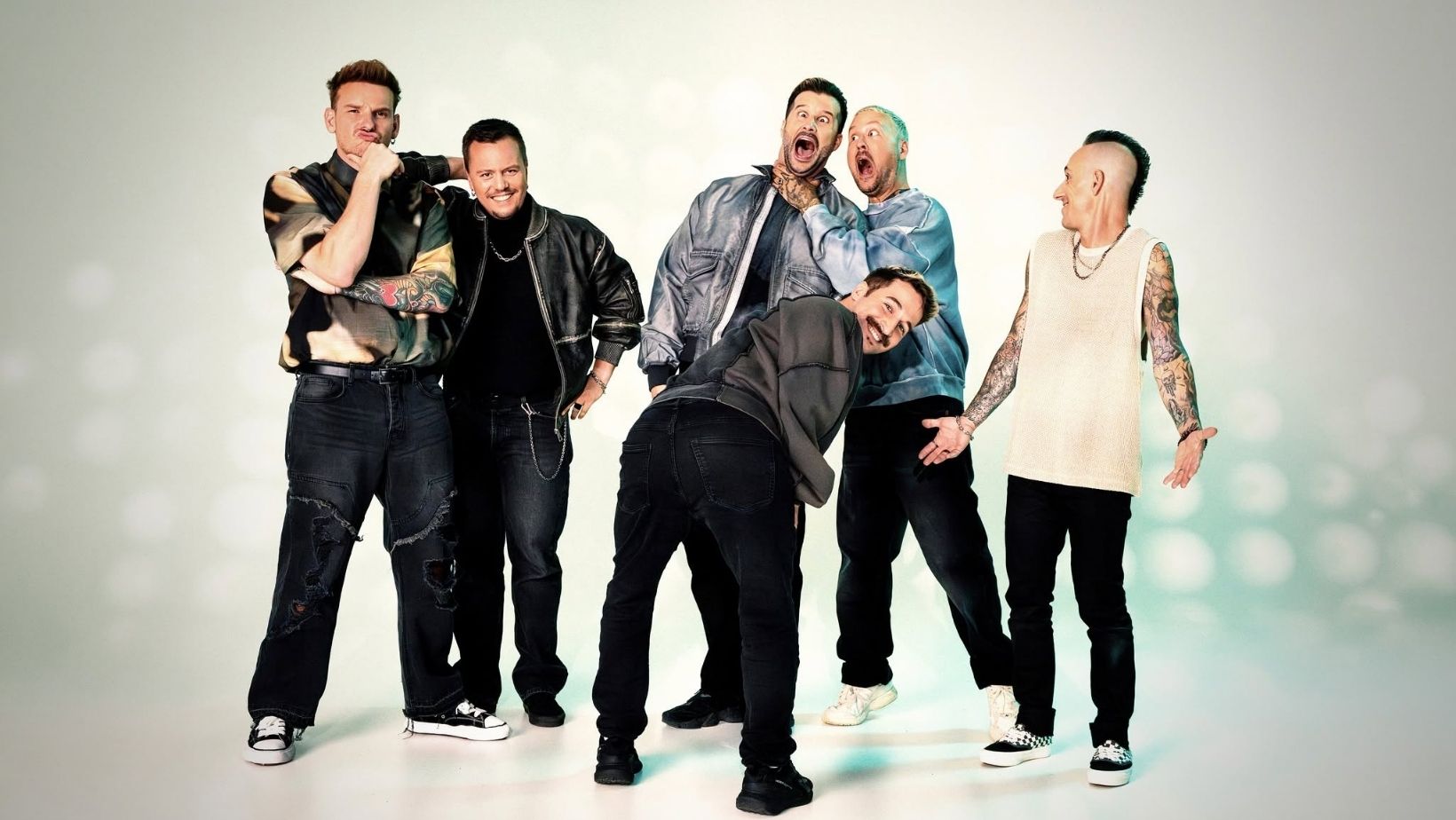
That said, ELECTRIC CALLBOY’s music is already built around a structure that does not necessarily require such cohesion. The band’s fundamental compositional method is to place different genre codes directly against one another. On “Tanzneid”, the collision of electronic dance rhythms and metalcore guitars, breakdowns working alongside four-on-the-floor beats, and big clean-vocal melodies cutting through heavy sections remain the band’s most defining characteristics. The title track is almost a schematic example of this approach: the tension created by synth pulses, mechanical dance rhythms, and heavy guitars turns the breakdown into a rhythmic entity designed not only for the pit, but for the dancefloor as well.
The band’s real achievement at this point is that they do not simply place different genres side by side. The electronic component often does not function as a decorative layer added over the guitars; it determines the rhythmic movement of the songs. Nor do the metalcore riffs remain a separate world alongside the electronic foundations. The two sides converge around the same rhythmic logic. This is precisely where ELECTRIC CALLBOY’s position within contemporary metalcore comes from. Unlike many bands that combine electronic music with metalcore, the aim here is not to reduce the distance between genres, but to keep that distance visible and turn it into a functional, often comedic contrast.
“RATATATA” is one of the most successful examples of this approach. The collaboration with BABYMETAL could easily have become a disposable spectacle. Instead, the aesthetic codes of the two bands connect naturally. There is an obvious contrast between BABYMETAL’s bright, melodic vocal lines and ELECTRIC CALLBOY’s heavy riffs, but the arrangement never makes that contrast feel artificial. The melodic side does not disappear beneath the metalcore foundation, nor does the weight of the guitars overwhelm the pop character. The result is not a duet in which the guest artist serves merely as a marketing asset, but a track that makes both bands’ identities visible within the same composition.
The same approach shifts toward punk rock on “Let The Good Times Roll”. Dexter Holland’s contribution from THE OFFSPRING allows the band to briefly step outside its electronic-metalcore axis. Despite its summery, radio-friendly construction, the song does not detach itself from the album’s overall aesthetic. “Still Waiting”, meanwhile, operates within a different context. The fact that former SUM 41 drummer Frank Zummo is now part of the ELECTRIC CALLBOY lineup brings a song from his former band into its new setting. It is an apt choice conceptually, but musically it is not enough to rescue one of the album’s more ordinary sections.
This is where the central contradiction of “Tanzneid” emerges. The album’s strongest moments are not the ones in which ELECTRIC CALLBOY imitate a genre, but the tracks in which they collide their own formula with another aesthetic. Conversely, when the band does not introduce a clearly defined outside idea, they fall back into electronic-metalcore conventions all too comfortably. “Heartclub” is a good example. Its heavier sections and memorable chorus are functional, but compositionally it does not move very far beyond the sonic universe the band has already established. What stands out here is more the song’s lyrical approach.
“Heartclub” addresses the way visibility has become a measure of personal worth in the age of social media, while ELECTRIC CALLBOY themselves are a band that has benefited considerably from this very mechanism. The song’s criticism therefore does not come across as finger-pointing from the outside. It speaks from within the band’s own strategy for rising to prominence. The idea of “I was born enough” offers a more direct counterpoint to the album’s flashy production and the culture of constant visibility. It is not a musically revolutionary track, but it carries one of the album’s more meaningful ideas in terms of the band questioning its own position.
“The Way You Are”, meanwhile, is a reminder of why the band still possesses such a potent mechanism for comedy and genre collision. The song initially builds a melodic structure rooted in early-2000s boy-band aesthetics before turning toward deathcore and deliberately disrupting the expectations established by the arrangement. Kevin Ratajczak’s vocal performance is particularly important here. The harsh vocals that follow the clean, excessively melodic section separate the song’s two aesthetic personalities not merely at the lyrical level, but through the vocal arrangement itself. Nico Sallach’s clean vocals carry the melodic side of that same contrast.
The positioning of these two vocalists against one another is, in fact, central to ELECTRIC CALLBOY’s sound. Ratajczak’s shouts form the weight-bearing center of the songs, while Sallach’s clean vocals provide the accessibility of the big choruses. The problem is that this division has become overly familiar across “Tanzneid”. It is increasingly easy to predict who will enter at which point, when the heavy section will arrive, and how much the chorus will be expanded. This is less a sign of the band deteriorating than of them having standardized their compositional language perhaps too effectively.
One of the album’s most valuable minor deviations is “The Savior”. Influences from ’80s pop, synthwave, and classic/stadium rock slightly stretch the band’s established electronic-metalcore framework. The more wave-oriented atmosphere of the bridge in particular, along with the drums being used within a different aesthetic, makes the track feel like more than another ELECTRIC CALLBOY template. “Revery” similarly opens up a different direction within the band’s existing sonic palette. These tracks do not alter the band’s identity, but they demonstrate that the boundaries of that identity are wider than they might initially appear.
This is precisely why the problem with “Tanzneid” is not a lack of variety. There are enough different sounds on the album. Punk rock, electronic music, pop, synthwave, deathcore, rap metal, and a range of guest artists all occupy the same framework. Yet this variety does not always translate into compositional variety. The material changes, but the fundamental instincts behind how the songs are constructed change less frequently. ELECTRIC CALLBOY’s formula has become so recognizable that even the transitions between genres eventually become predictable.
This inevitably brings “TEKKNO” into the comparison. Yet the comparison itself is somewhat unfair. Reproducing the musical and cultural impact of songs such as “We Got The Moves” or “Pump It” is not easy. “TEKKNO” arrived at a particular moment when the sound the band had built with its new lineup had fully settled into place and coincided with a collective desire for communal entertainment in the post-pandemic period. “Tanzneid”, by contrast, is no longer the album of a band waiting to be discovered. Listeners already have an established idea of what ELECTRIC CALLBOY can do.
The band’s success only raises those expectations further. Following “TEKKNO”, ELECTRIC CALLBOY are no longer simply operating within the metalcore scene. Connections with artists from different generations and scenes, such as BABYMETAL and THE OFFSPRING, have expanded not only the band’s musical boundaries but also its cultural reach. The remixes at the end of the album continue this expansion. The involvement of names such as Sullivan King, Paul Elstak, and Paolo Ferrara from different electronic circles makes the band’s strategy of reaching audiences beyond metal increasingly visible.
Musically, these remixes contribute less directly to the album’s main body than they demonstrate the adaptability of the ELECTRIC CALLBOY brand across different scenes. The same applies to the band’s ELECTRIC BASSBOY project. What matters here is less the quality of each individual electronic arrangement than the fact that the band can now operate within events and audience spaces outside metalcore while retaining its own identity. From this perspective, “Tanzneid” functions not merely as an album, but as part of the band’s increasingly expansive musical ecosystem.
Yet this expansion does not resolve the album’s central dilemma. ELECTRIC CALLBOY are now in a position to open as many different doors as they want. Despite that, the strongest moments on “Tanzneid” mostly emerge from rearrangements of mechanisms the band has already proven effective. At its weakest, the album simply repeats those mechanisms. Particularly in the second half, tracks lacking a clearly defined idea or a strong genre collision move closer to the band’s more generic electronic-metalcore sound, making them easier to consume and easier to forget.
There is an interesting paradox at the heart of the band’s “satirical metalcore” approach. For ELECTRIC CALLBOY, absurd ideas are not merely comedic devices; they function as compositional fuel. Turning a boy-band parody into deathcore, combining Eurodance rhythms with a breakdown, or writing a collaboration with BABYMETAL also raises the band’s musical energy. Once the absurdity is removed, what remains can be little more than a well-performed, well-produced electronic-metalcore song. This is exactly where the sense of ordinariness in some of “Tanzneid”’s tracks comes from.
The production reinforces this formula as well. The brightness of the electronic elements, the low-frequency weight of the guitars, and the central placement of the vocals shape the music to work on a club and festival scale. The rhythmic openness of the breakdowns and the breadth of the choruses make it easier to transfer the energy of the live performance into the studio recording. The album’s oversized construction is therefore not accidental. Yet when a high-energy production consistently supports the same dramatic rises, it eventually creates a problem of contrast. When everything is big, it becomes harder to distinguish the moments that are genuinely huge.
For that reason, the real question surrounding “Tanzneid” is not whether the band should be heavier, more electronic, or funnier. It is how far they are willing to move beyond the standards they have established for themselves. Tracks such as “The Savior”, “The Way You Are”, and “RATATATA” show that ELECTRIC CALLBOY are still capable of connecting different ideas within the same song. Yet the fact that this boldness is not pursued more consistently across the rest of the album suggests that the band is not making full use of the creative freedom at its disposal.
“Tanzneid” is not an album in which ELECTRIC CALLBOY are experiencing an identity crisis; rather, it reveals the comfort problem faced by a band whose identity has become exceptionally well defined. The question is no longer whether they can find their own sound, but how far they can push its boundaries. The album therefore demands to be assessed less through the pursuit of traditional cohesion than through how effectively its individual tracks function within their own contexts. The listener is not discovering a new ELECTRIC CALLBOY here, but tracing the points at which the system the band has already established can still bend.
And ultimately, the most interesting thing about “Tanzneid” is that the band no longer has to reinvent itself. On the contrary, precisely because there is no such obligation, they have the freedom to push further. The album offers some strong examples of that freedom, but does not take advantage of it at every opportunity. ELECTRIC CALLBOY’s real creative limitation today is not metalcore, techno, or pop, but how predictable their own formula has become. Rather than crossing that boundary, “Tanzneid” makes it remarkably clear where the boundary lies.
