
ALBUM REVIEW
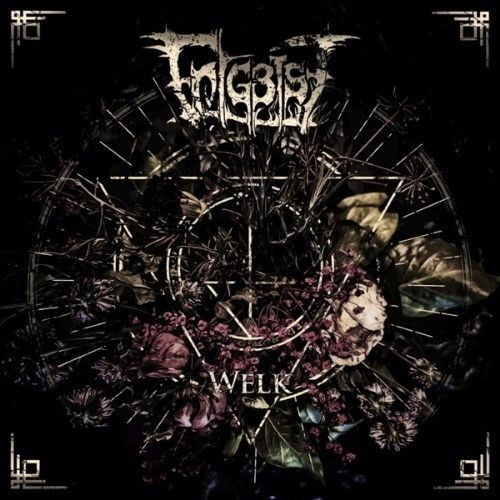
Entgeist – Welk
Fragmented Tension in Modern Blackened Death Metal
Entgeist has emerged in recent years as one of the notable names on the German scene with an approach that sharpens the boundaries between technical density and dark atmosphere in modern extreme metal. The band transforms black metal’s tremolo-based melodic language and the fractured riff architecture of technical death metal into a structure that continuously generates tension within the same compositional frame. Welk, their second full-length, stands out as the most distilled expression of this approach, both in terms of production and aesthetics.
The album constructs the hybrid line between modern black metal and technical death metal not as a “fusion” idea, but as a compositional language built on sustained tension. Its backbone is formed by tremolo-driven melodic guitar figures that are constantly fragmented by abrupt rhythmic interruptions, then reassembled into staccato riff blocks rooted in death metal. This structure is immediately apparent from the opening sequence: “Am Rande der Finsternis” and “Gefangen in der Zeit” move through blastbeat eruptions that repeatedly break the linear flow of melodic lines, alongside groove-leaning rhythmic pauses. Here, Entgeist treats melody not as a continuous flow, but as material that is repeatedly dismantled and reconfigured.
The guitar writing operates on two axes. Lars and Sergej’s division is clear: one constructs more rhythmic, sharp, palm-muted death metal blocks, while the other continuously destabilizes the surface with tremolo melodies and dissonant upper lines. This separation provides technical clarity, particularly on tracks like “Auserzählt” and “Imperfektion”, but at times it also pushes the compositions toward an uncontrolled accumulation of layers. Rather than developing around a single motif, the riffs often progress through rapid shifts, increasing dramatic intensity while weakening thematic anchoring in certain transitions.
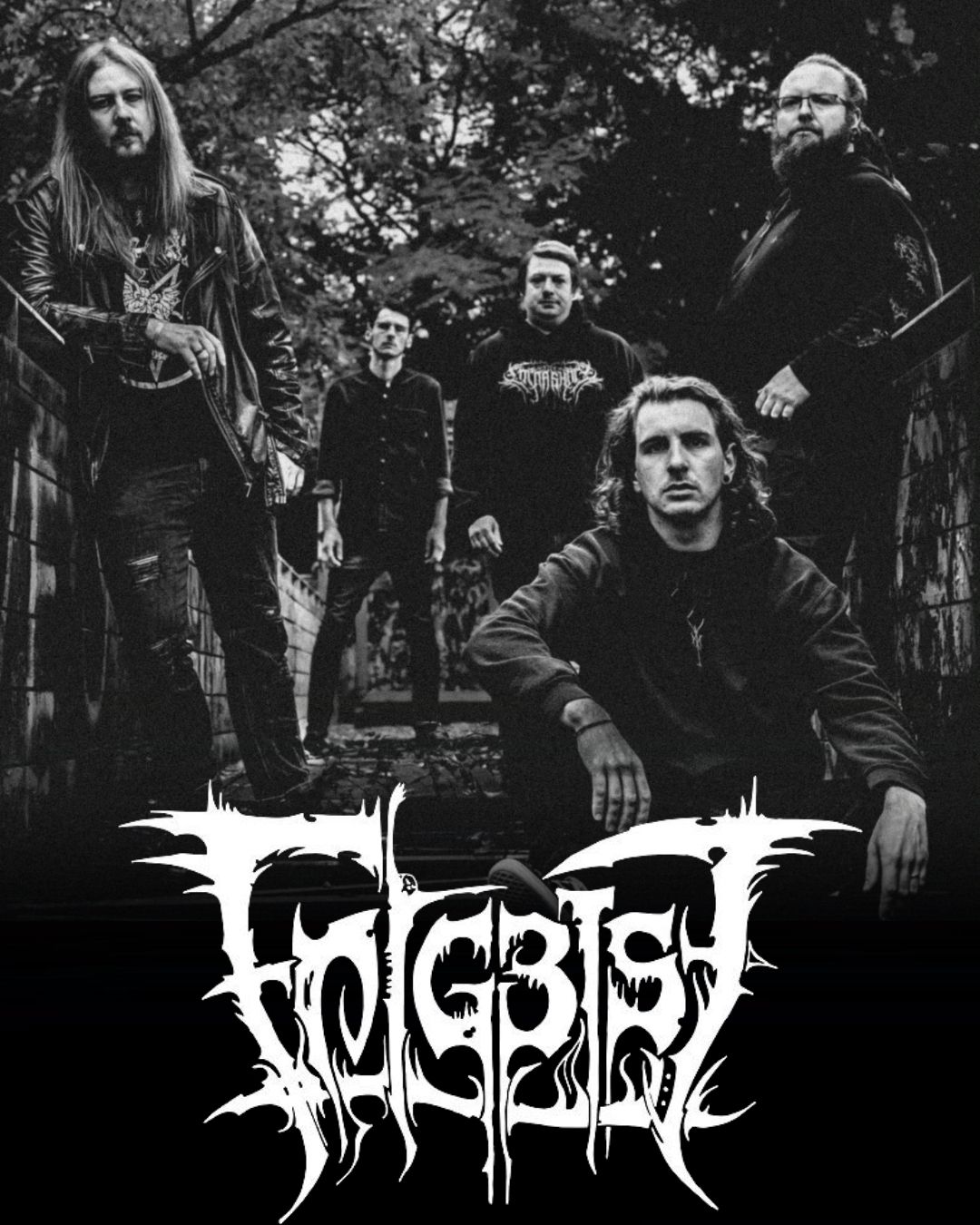
The drum performance (Godvaser) is one of the album’s primary structural drivers. Blastbeats are not used merely for speed, but positioned to fragment and realign guitar structures. The contrast between double-bass passages and heavy groove sections, especially in “Gefangen in der Zeit” and “Lethargie weicht Wut”, establishes a structural rather than psychological dynamic. The drums’ modern yet unsterilized production makes the technical aspects of the album more visible; however, in denser mixing moments, cymbal and guitar frequencies occasionally overlap, partially obscuring finer details.
The bass guitar (Randy) functions as a critical balancing element in these dense arrangements. Particularly in slowed-down sections, it does not simply follow the riffs, but fills harmonic gaps, placing a moving foundation beneath the rigid guitar blocks. On tracks such as “Auserzählt” and “Verwelkt”, this approach prevents the guitars from solidifying into a monolithic wall and adds depth to the composition.
The vocal approach is based on Tim’s articulation-centered scream technique. Despite the extremity of the delivery, the intelligibility of the German lyrics is preserved, which turns Entgeist’s lyrical dimension into an integrated part of the composition rather than a purely atmospheric layer. The vocals are not constantly at maximum intensity; in certain passages they step back and settle into the rhythmic structure, strengthening the dramatic flow of tracks such as “Auserzählt”.
The album’s compositional architecture follows the typical tension–release cycle of modern black metal and post-black metal aesthetics, but executes it through a segmented rather than linear structure. Short transitions like “Fatigue” function not only as atmospheric interludes, but as resets of the preceding rhythmic pressure. “Fassade”, on the other hand, demonstrates how intensity is rebuilt after this reset, moving from more open tremolo spaces back into death metal–driven ruptures.
A key point here is that Entgeist does not use atmospheric passages as a structural alternative, but rather as different degrees of intensity within the same sonic severity. For example, “Lethargie weicht Wut” initially opens a broader and heavier space, but this openness is not sustained; as the track progresses, it is pulled back into increasingly compressed rhythmic structures. Across the album, this approach favors the sustained modulation of tension over the creation of genuine breathing space.
The production is positioned close to modern blackened death standards in terms of clarity. The Iguana Studios mix spreads guitars across a wide stereo field while anchoring the drums sharply in the center. This improves the readability of technical passages, but in particularly dense sections, overlapping layers occasionally push certain guitar motifs into the background. While this can be interpreted as an aesthetic choice, it also becomes a factor that partially challenges compositional coherence in the most complex moments.
One of the album’s most distinctive stylistic traits is the constant collision between black metal tremolo writing and technical death metal riff logic. However, this collision often unfolds through sequential transitions rather than true synthesis of the two languages. In other words, Entgeist does not fully fuse the genres organically, but instead places them side by side through rapid cuts within the same temporal flow. This maintains high energy, but in some sections leads to ideas being consumed sequentially rather than mutually developed.
On tracks like “Ein Flammenmeer” and “Funkenspiel”, this structure is tested on a broader scale. Particularly in the final track, the opening’s acoustic-toned, clearer guitar lines quickly transform into a distorted mass, and the composition once again oscillates between technical density and atmospheric expansion. However, this expansion functions more as dynamic contrast than structural transformation; the underlying organizational logic of the piece remains unchanged, with only intensity levels being redistributed.
Aesthetically, the album’s focus on urbanity, concrete, isolation, and decay aligns broadly with its musical structure. However, this parallel is rarely expressed as direct thematic narration; instead, it is articulated through rhythmic compression and harmonic dissonance. As a result, the album’s narrative dimension emerges as a byproduct of technical compositional decisions rather than an externally imposed conceptual framework.
In conclusion, Welk operates on the boundary between modern black metal and technical death metal, preferring to maintain the tension between these two fields rather than fully integrating them. Entgeist’s approach demonstrates a high level of control and technical precision in riff architecture and drum design, while also revealing a structural limitation in certain passages where dense streams of ideas struggle to find sufficient breathing room. Nevertheless, the album avoids the atmospheric expansion tendencies common in contemporary extreme metal, instead favoring rhythmic fragmentation and technical density. For the listener, this results in a compositional space that remains in constant motion but is rarely truly “rested”; Entgeist ultimately situates itself within this movement, defined by a modern extreme metal language that is highly technical yet still structurally fragmented.
OZAN