
ALBUM REVIEW
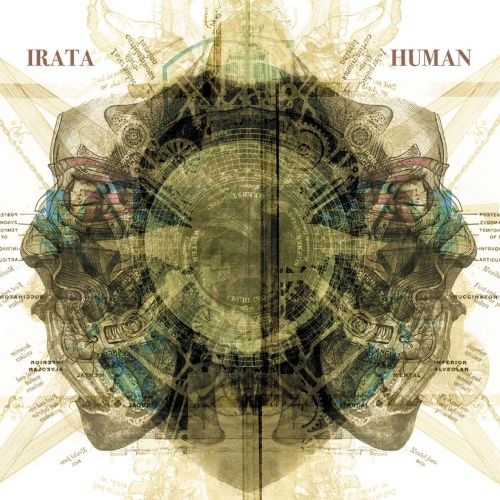
IRATA – Human
A Layered Evolution Between Sludge and Progressive Rock
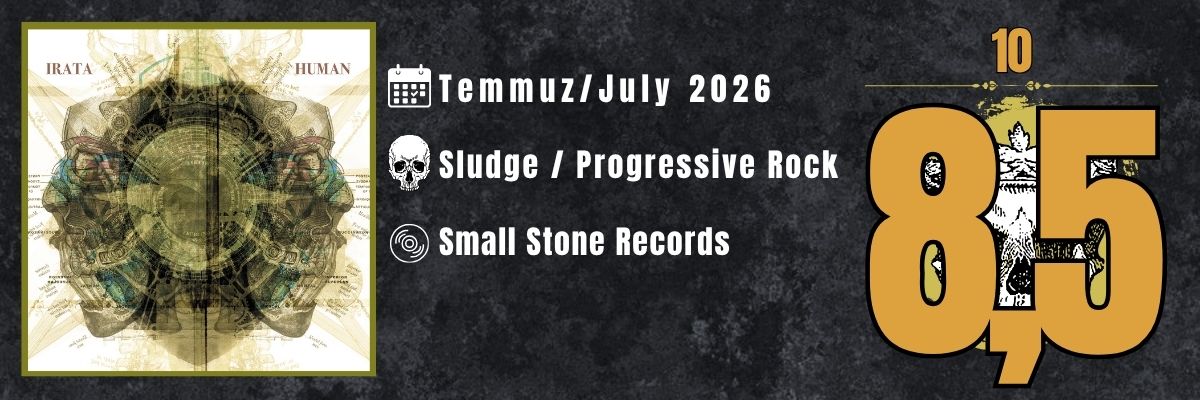
IRATA has, in recent years, continuously reshaped its own sonic identity along the axis of sludge and progressive rock, treating genre boundaries not as a fixed identity but as a fluid compositional field. A distinguishing feature of the band within the independent US heavy underground has been its bass–drum interplay and layered guitar writing, and its long gaps between album cycles have only amplified attention around each new release. “Human” positions itself as the next stage of this accumulated trajectory, expanding both the melodic scope and the overall spectral range of the band’s sound.
The first thing that stands out on the album is how the riffs redefine “heaviness” away from pure distortion density and toward a more fluid harmonic tension. The guitar layers retain the classic sludge/stoner thickness, yet in most sections the riffs avoid settling into a clear sense of cadence, instead remaining suspended through extended chord structures and partially unresolved progressions. This approach causes the groove, particularly in the opening tracks (“Altar” and “Seeds”), to move through micro-shifts rather than a fixed central pulse. Rather than operating through a traditional “riff + variation” logic, the writing functions more like an evolving block structure.
The drum performance is the primary backbone of this architecture. The rhythmic framework established by Jon Case and Jason Ward moves away from the straight 4/4 weight of classic stoner metal, instead bringing a TOOL-referential polyrhythmic sensibility into focus, especially in transitional passages. However, there is a crucial distinction here: the rhythmic complexity never turns into technical display. The drums operate less as a metronome dictating where the riffs go, and more as a driving force that steers the guitar layers themselves. The result is a structural expansion where the songs feel like they are “opening up” while moving forward.
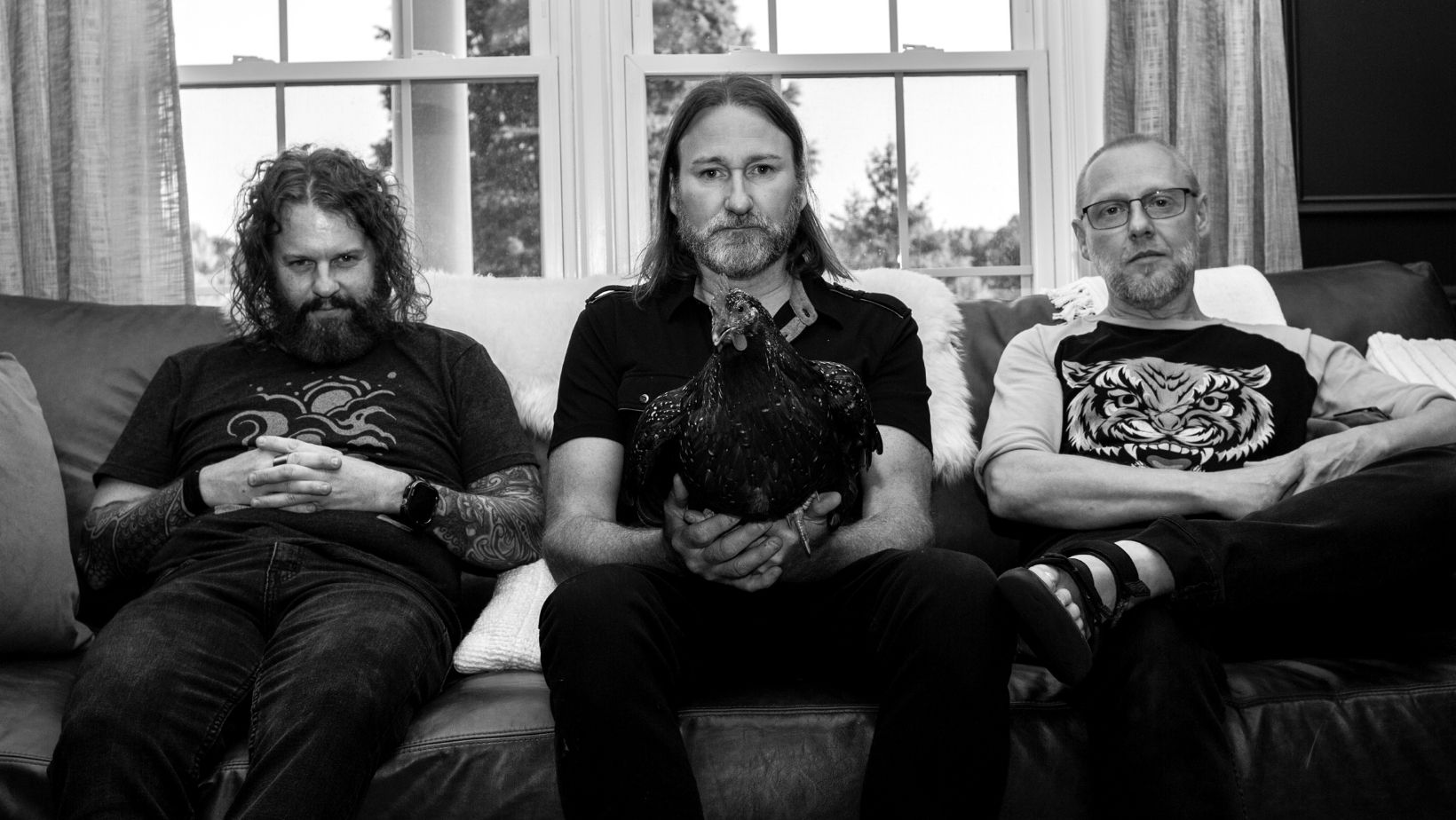
The bass guitar remains central to IRATA’s identity, as it always has. Rather than the guitar-driven wall typical of sludge traditions, the bass line often functions as the primary carrier of the harmonic framework. In mid-tempo passages especially, the saturated distortion of the bass creates a frequency field that does not sit underneath the guitar riffs but often pushes forward against them. This choice reflects a mixing philosophy that can be read as a kind of “low-end leadership.” As a result, the groove is felt through the bass rather than the guitar.
The vocal layer is the most stylistically diverse element on the record. The shared vocal structure between Jason, Jon, and Owen does not settle into a single character, instead producing multiple layers of texture. The increased presence of clean vocals in tracks such as “Confessions” and “Slipped” creates not a clean break between harsh and melodic lines, but a stacked expressive field. The key point here is that the vocals do not function as a force that carries the riffs, but as one that layers them. This opens up the album’s more melodic direction without fully dissolving its sludge-derived density.
In terms of guitar tone design, there is a clear expansion compared to the Tower era. While fuzz-based aggression is still intact on “Human,” the increased use of shoegaze and alt-rock-informed reverb and delay is clearly audible. Especially in the second half of the record, the guitars shift from riff generation toward atmospheric construction. At this point the TOOL influence becomes more pronounced: riffs no longer function as repeating structures, but as harmonic organisms undergoing constant modulation.
The second half of the album introduces a more defined structural break. The grunge/stoner density of the opening section gives way to a more controlled, progressive metal-oriented writing approach. Tracks like “Mirrors” and “Daystar” move forward less through tempo changes and more through shifts in dynamic intensity. What becomes apparent here is the band’s redefinition of “heaviness” not through riff weight but through compositional breadth. However, this transition does not always produce a full structural reconfiguration; in some passages, the progressive elements remain more like decorative layers added onto an existing riff framework.
Keyboard usage is one of the most significant areas of expansion on the album. Particularly in psychedelic transitions, synth and atmospheric layers do not break apart the guitar density but instead extend it into a wider sonic field. Yet a critical point emerges here: these keyboard textures at times function less as structural components that redirect composition and more as surface-level enhancements of the sonic spectrum. In other words, the experimental dimension of “Human” does not always translate into structural transformation; in some sections it simply increases atmospheric density.
On the production side, J. Robbins’ mixing approach stands out as one of the defining characteristics of the album. The engineering avoids the overly compressed wall-of-sound typical of modern sludge recordings, instead allowing instruments to collide within a more open space. This is especially evident in the bass–drum interaction, where low frequencies are not collapsed into a single block but remain separated layers. This choice strengthens the sense of a live performance, while occasionally giving the mix a slightly loose rather than tightly polished character.
The increased emphasis on vocal melody on “Human” moves the record away from being purely riff-centered sludge. However, this melodic expansion is not always supported by compositional risk-taking. Some chorus structures function less as transformative moments and more as “accessibility modules” inserted into the overall flow of the songs. This creates a tension between the album’s progressive ambitions and the relatively safe construction of certain sections.
The trajectory from “Altar” to “Daystar” leans thematically toward a narrative of closure and renewal, but this idea operates more through the linear perception created by track sequencing than through direct musical mechanisms. On a structural level, the narrative is built through tonal shifts and changes in dynamic intensity rather than explicit leitmotif development or thematic recall. As a result, the notion of “storytelling” functions more as an external frame than something fully embedded in the compositional structure.
Ultimately, IRATA chooses on this record not to expand its language through rupture, but to layer and refine its existing vocabulary. For the listener, this album demands attention less to riff-centric sludge mechanics and more to the interaction between bass and drums, the atmospheric widening of guitars, and the multi-layered vocal construction. Yet because this expansion does not consistently translate into full compositional reinvention, the record often moves between extended variations and genuinely new structural proposals.
In this sense, “Human” positions itself not as a radical break within the scene, but as a more refined and broadened version of IRATA’s established language. The listening experience is driven by continuous shifts in intensity and layered groove structures, while the album’s real point of impact ultimately emerges in the question of how much of this variety actually translates into structural transformation.
OZAN
https://x.com/iratalive
https://www.instagram.com/iratalive
https://www.smallstone.com
https://www.facebook.com/smallstonerecords
https://x.com/SSRecordings
https://www.instagram.com/smallstonerecords