ALBUM REVIEW
Moonspell – Far From God
A Refined Return to Gothic Metal's Dark Core
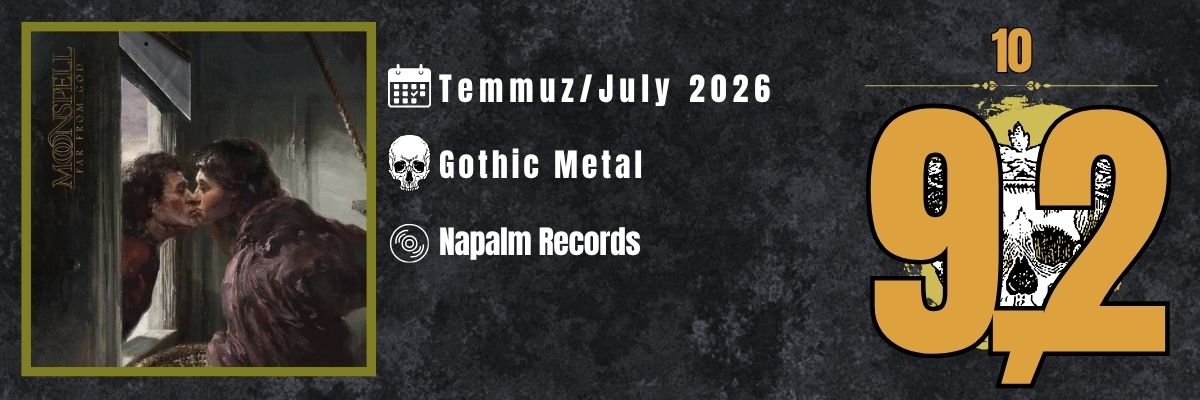
Moonspell have long been one of the first names that come to mind when gothic metal is mentioned. Over a career spanning more than three decades, the Portuguese veterans have continuously evolved their identity without abandoning the core of what defines the genre. Remaining true to their roots while reinterpreting the balance between atmosphere, melody, and dark aesthetics on every release, they have built a broad and remarkably consistent discography. Their fourteenth studio album, Far From God, places that philosophy back at the forefront while also inviting listeners to consider how Moonspell continue to maintain their place within today's gothic metal landscape.
Many Moonspell fans were probably expecting an aggressive opening. Instead, the album takes the opposite approach, relying on a compositional philosophy that builds its atmosphere layer by layer rather than through sheer force. The riffs never fight to dominate the mix; instead, the guitars, keyboards, and Fernando Ribeiro's multi-faceted vocal performance create space for one another, forming a shared dramatic framework. In that sense, Far From God serves as a bridge between the band's more experimental recent work on Hermitage and their classic era. While the album openly references the aesthetics of '90s gothic metal, it does so not through nostalgia, but by bringing Moonspell's long-established musical identity back into focus.
Opening tracks "Cross Your Heart" and "Far From God" set the tone with their measured approach. The arrangements lean slightly more toward rock, using prominent bass lines and expansive keyboard layers to establish the album's dark atmosphere with ease. At the same time, these are also its safest compositions. The title track, in particular, opens with enough strength to raise expectations, but the riff development that follows never quite sustains that same dramatic intensity. Their selection as singles makes sense, yet they don't fully represent what this album ultimately excels at.
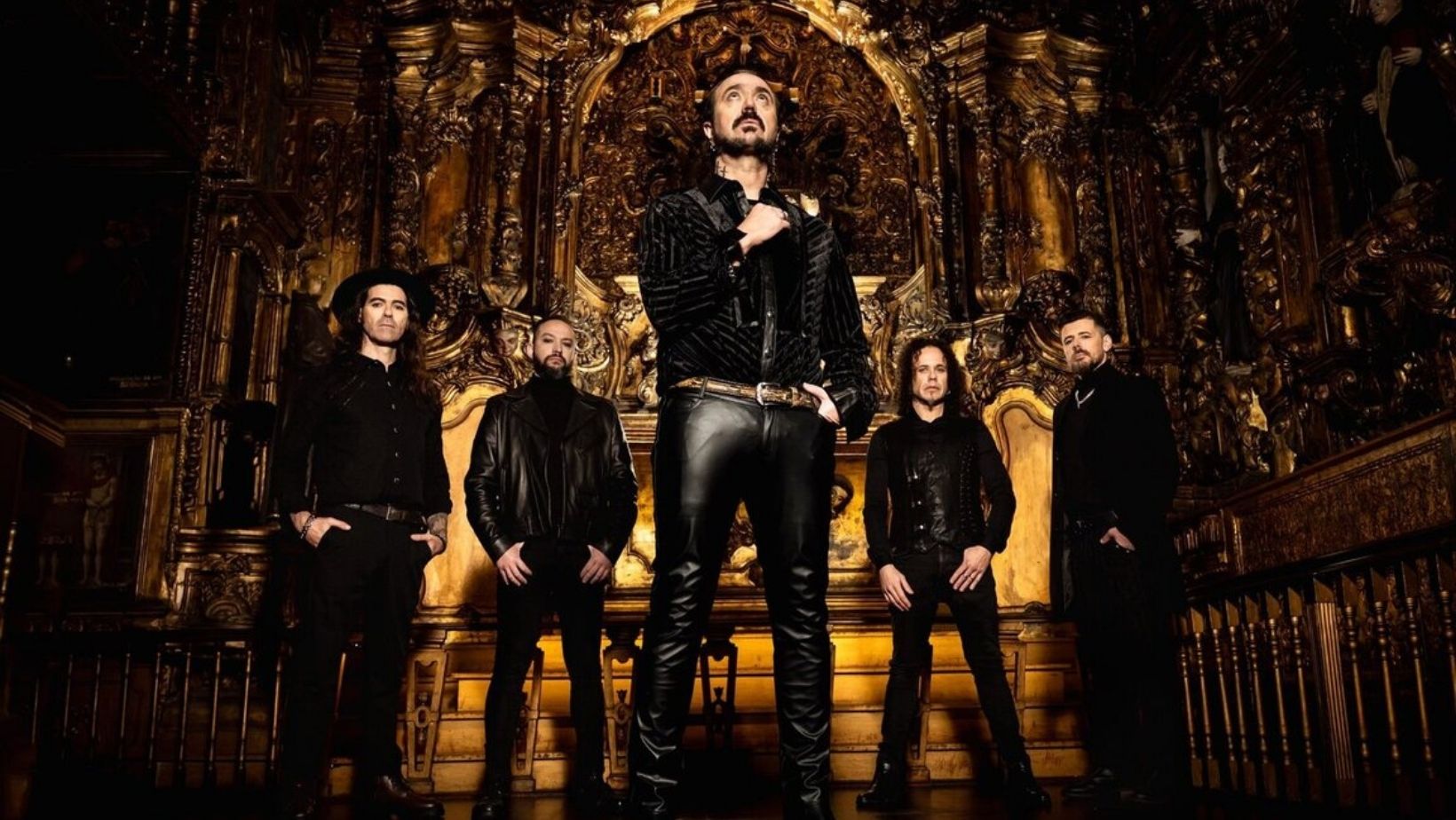
The record truly comes alive with "Biblical." Built around Aires Pereira's commanding bass line, the song patiently introduces each instrument in succession, creating tension with deliberate precision. Fernando Ribeiro's shift from whispered vocals to harsh screams isn't simply a dynamic contrast; together with the increasingly forceful drum patterns and the expanding guitar harmonies in the final section, it becomes the central element driving the song toward its dramatic climax. The doom-influenced rhythmic approach doesn't merely establish atmosphere—it also defines the composition's entire structural arc.
The unquestionable centerpiece of the album is "The Great Wolf In The Sky." Ricardo Amorim's melodic guitar writing works in perfect tandem with the spacious atmosphere created by the keyboards. Guest violinist Alicia Nurho's contribution never feels like an ornamental addition; her performance broadens the melodic texture, reinforces the song's epic character, and transforms the melancholy carried by the guitars into an additional sonic layer. Atmosphere has always been central to Moonspell's take on gothic metal, but here it functions as a structural device that expands the expressive reach of the riffs rather than overshadowing them.
As the album progresses, the tempo deliberately slows. "Your Promise Of Light" and especially "For The Love Of Mortals" bring the band's romantic gothic side to the forefront. The former stands out through its Eastern-tinged guitar motifs and Ribeiro's effortless transitions between whispered passages and harsh vocals, while the latter flirts with the structure of a power ballad. Ricardo Amorim's emotional guitar melodies and tasteful solo give the track its identity, but the succession of mid-tempo songs at this point noticeably drains the album's momentum. Individually, these compositions work well, yet within the album's sequencing they struggle to maintain the same level of impact.
That sense of restraint is shattered by "Our Freedom To Fall." Featuring crushing palm-muted riffs, doom-laden guitar tones, and passages that occasionally edge toward death-doom and even black metal, it reconnects with the more extreme side of Moonspell that has never entirely disappeared. The heaviness isn't there for spectacle; it functions as the natural release of the controlled tension built by the preceding tracks. As a result, it becomes the album's most significant structural turning point.
Closing track "Reconquista" expands the band's dramatic approach into a grand finale. Portuguese-language passages, a powerful guitar solo, and arrangements that evoke a ceremonial atmosphere elevate the song beyond the role of a simple closer, making it feel like the logical conclusion to everything that came before. Even so, it's difficult to shake the feeling that the album reaches its true peak one track earlier.
Jaime Gomez Arellano's production also plays a crucial role in shaping the album's identity. Rather than embracing the sterile sheen often found in modern gothic metal productions, the mix preserves the guitars' rich midrange while allowing the keyboards to widen the soundscape without ever pushing the riffs aside. Fernando Ribeiro's vocals occasionally sit a little too prominently in the mix, but that choice also reinforces his role as the album's central narrator.
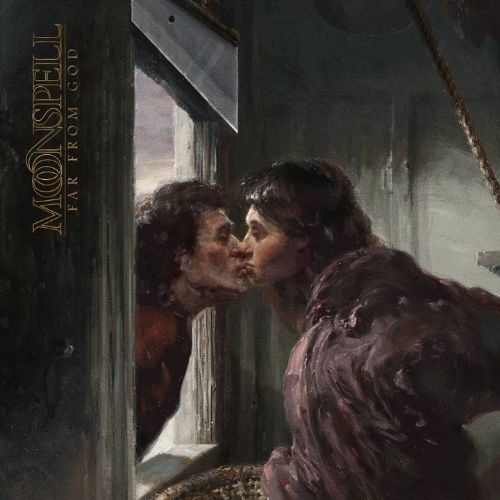
Eliran Kantor's cover artwork complements the music with remarkable cohesion. It reflects the album's romantic gothic aesthetic and its themes of religion, death, and decay without resorting to exaggerated theatrical clichés. The visual presentation moves in step with the music's restrained darkness, functioning not as mere decoration but as an integral part of the album's overall artistic identity.
The promotional claim of Far From God being "the Irreligious of the 21st century" ultimately proves too ambitious. Rather than representing a revolutionary turning point in Moonspell's career, the album refines the mature songwriting approach the band has developed in recent years while reconnecting with the essence of what has always made them unique. It is neither as experimental as Hermitage nor as aggressive as 1755; instead, it carefully rebalances the melodic, romantic, and dark dimensions of gothic metal.
At a time when many bands in the gothic metal scene recreate the genre's visual aesthetics, Moonspell remain one of the few capable of supporting that imagery with genuinely compelling songwriting. Far From God may not redefine the boundaries of the genre, but by placing atmosphere, melody, and dramatic structure back at the center of its creative vision, it serves as a convincing reminder of why Moonspell continue to stand among gothic metal's most distinctive voices.
OZAN