ALBUM REVIEW
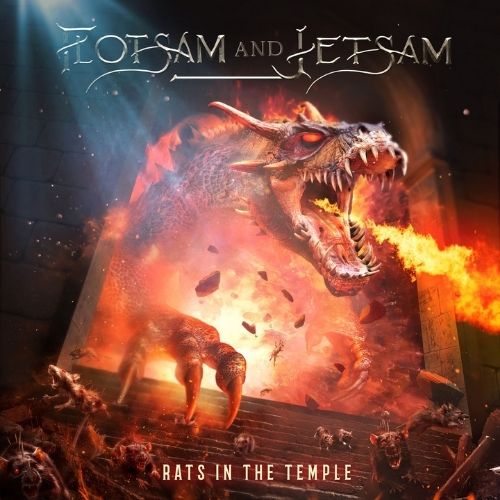
FLOTSAM AND JETSAM - Rats In The Temple
Thrash heritage meets modern weight with conviction.
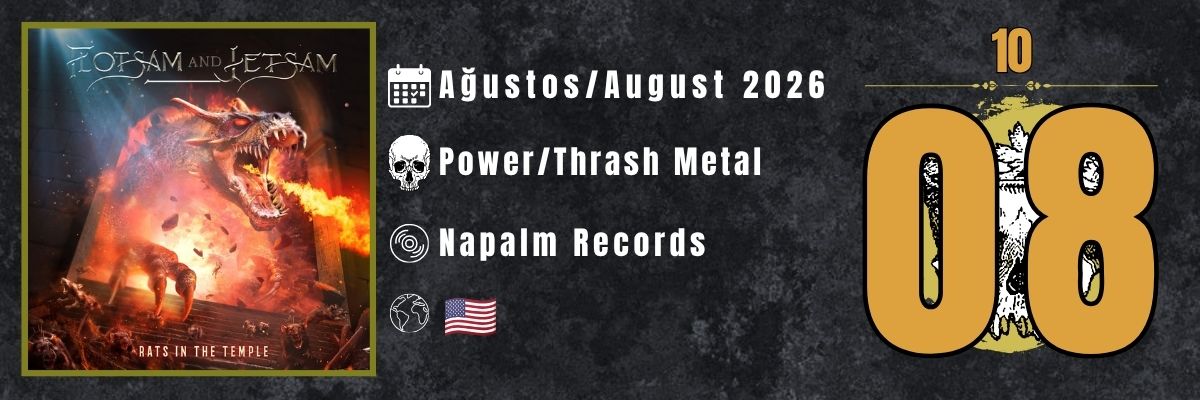
FLOTSAM AND JETSAM's career can be divided into distinct periods with relative ease. Having developed a path of their own within the harsher, more punk-influenced strain of American thrash metal in the late 1980s, the band sometimes lost sight of its own identity while trying to adapt to the changing musical climate in the years that followed. The resurgence that began with their 2016 self-titled album, however, has evolved into one of the most consistent periods in their long history. "Rats In The Temple" once again shows that this renewed momentum is no temporary revival; yet despite all the advantages of the form the band has reached today, the album's sonic character prevents some of its strongest compositions from having quite the impact they deserve.
It becomes clear within the first few minutes why this formula still works. 'Harvesting The Hate' combines an expansive opening built around keyboards and orchestral touches with fast thrash riffs, while Eric A.K.'s vocals form the song's melodic center. His voice no longer leans on the sharp high notes of his early years in quite the same way; instead, its rougher, fuller character fits better with the band's current approach to songwriting. There is a distinct sense in FLOTSAM AND JETSAM's recent work that the riffs are less concerned with carrying the vocals than with giving them room to breathe. As a result, the strong choruses do more than provide memorable hooks; they also shape the dramatic structure of the songs.
The band's thrash heritage is never left to stand on its own, either. The more direct thrash sections of 'Absolution' sit alongside the USPM melodies that rise in its chorus, while 'Blame The Knife' broadens the formula with more dissonant guitar ideas, tempo changes, and clearly defined melodic hooks. This approach feels particularly natural at the album's best moments. The more groove-oriented, rock-leaning rhythmic character of 'First On The Spike', the classic heavy metal melodies in 'Her Blood Your Pain', and the high-speed riffing of 'The Edge Of Nowhere' all show that the band can draw on different parts of its own history within a single songwriting language rather than remaining tied to one particular subgenre.
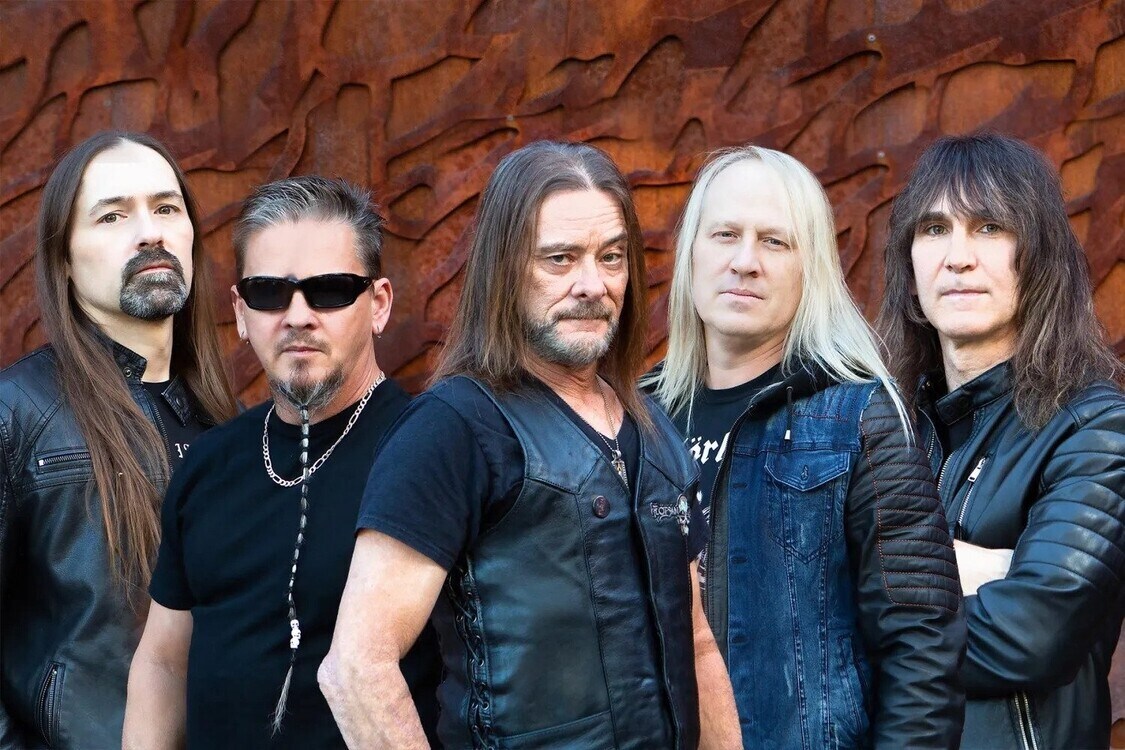
This diversity is one of "Rats In The Temple"'s biggest strengths. In another band's hands, putting thrash, power metal, classic heavy metal, and a more modern approach to riffing side by side could easily produce a fragmented result. Here, Eric A.K.'s vocal character and the melodic approach of the two guitars provide a common axis. 'The Ghost Behind My Door' and the album's title track in particular demonstrate why the band's more theatrical, large-scale compositions work. The former fits several different melodic ideas into the same song and occasionally becomes overly crowded, while the latter brings its orchestral introduction, hard-hitting rhythms, and melodic guitars together in a more balanced whole. 'The Ghost Behind My Door', meanwhile, is one of the few tracks that fails to fully realize its potential; its ideas are strong even when they branch off in different directions, but the way they connect is not always equally convincing.
The occasional fluctuations in quality after the album's midpoint also become significant here. Despite its riff-driven structure, 'Last Rites' struggles to deliver the expected weight, particularly because of the muddiness in the lower frequencies, while 'A Taste For War' draws attention with its more restrained opening rhythm section but does not push that idea far enough. 'Her Blood Your Pain', by contrast, is one of the album's strongest melodic moments. The way its main guitar melody brings together classic American and British heavy metal traditions, then combines them with the weight of the chorus, helps explain why the band can still produce new material despite its age. 'Anthem For The Broken' creates a similar effect with its rising chorus in the final stretch, while 'Not Going Down That Way' closes the album on an appropriate note with its combination of acoustic guitars and hard-edged thrash riffs.
The production sitting over these strong compositions, however, is not equally successful. Although the album has a clean, controlled, modern sound, the guitars can come across as overly compressed and flat in places, preventing the drums and bass from generating the weight they need. In sections expected to deliver larger melodic or rhythmic surges, the sound fails to expand and instead remains at roughly the same dynamic level, reducing the physical impact of the songwriting. The guitar solo and rhythmic hits in 'Damnation', for example, are moments that should stand out on their own but are not given enough space to do so. Even so, despite the clinical character criticized by some sources, the production never becomes a problem that completely suffocates the album; the issue is more a matter of leaving untapped space in which good compositions could have sounded stronger.
"Rats In The Temple" therefore does not disrupt the consistency FLOTSAM AND JETSAM have established in their recent period. On the contrary, it shows that after more than four decades, the band is still developing its strengths rather than clinging to a particular genre label. The album lacks the flawless cohesion or consistently strong track sequence that would make it a discographical peak; some tracks could have been left out in favor of a tighter selection. But the band's ability to combine its thrash heritage with classic heavy metal melodies, USPM influences, and a contemporary sense of weight is still very much alive. That is where the real value of "Rats In The Temple" lies.

https://www.flotstildeath.com/
https://www.instagram.com/flotsamandjetsamofficial
https://flotsamandjetsam.bandcamp.com/music