

Album Review
GRAVERY - Purified in Blood

The “controlled destruction” aesthetic that the Italian deathcore scene has increasingly leaned into in recent years often places production weight ahead of compositional depth. While Gravery do not completely overturn that formula on “Purified in Blood”, they develop an approach that supports beatdown-centered heaviness with an atmosphere of psychological tension, preventing the material from surrendering entirely to breakdown density. The EP’s core identity emerges not from technical showmanship, but from how the riffs are positioned, how space is utilized, and how the vocal performance controls the music’s sense of menace.
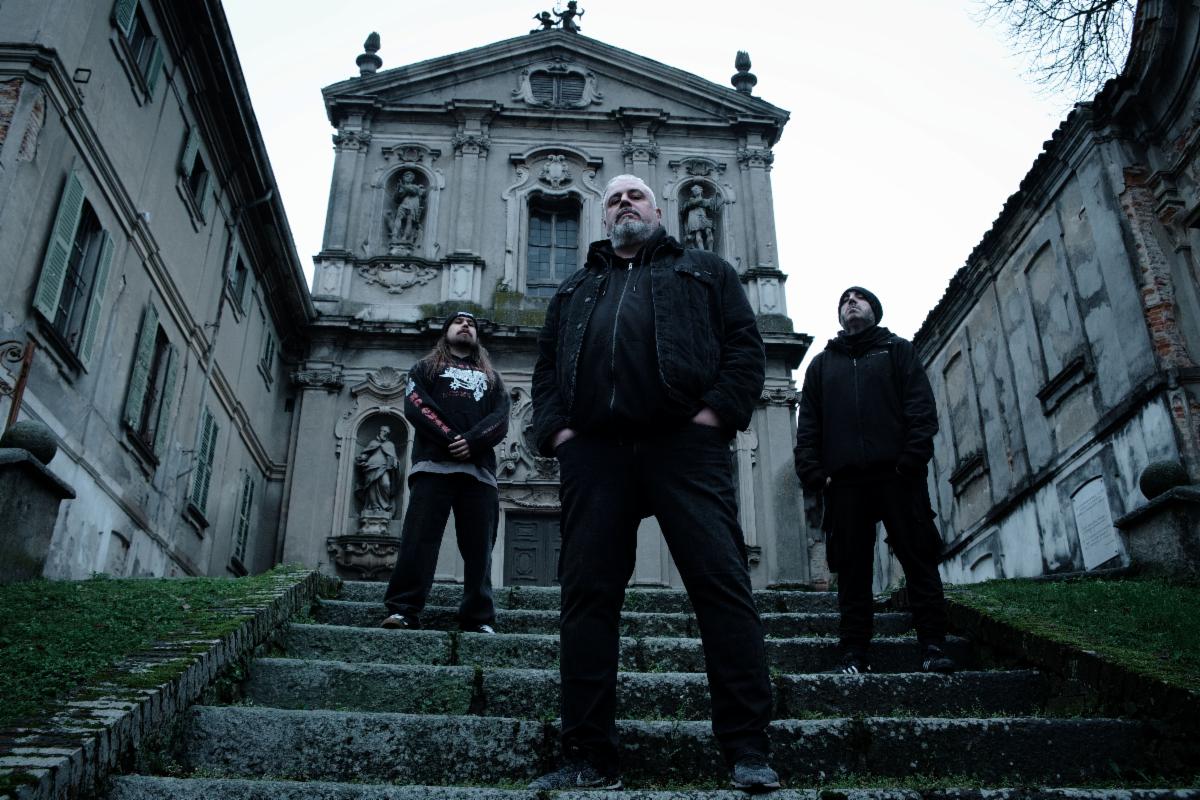
Opening track “Icon of Sin” reveals the album’s compositional logic within its first minute. The whispered introduction is not merely a cinematic detail added for atmosphere; it functions as a psychological preparation space for the rhythmic oppression that follows. Although the guitar tones carry the typical low-frequency bulk of modern deathcore, the riff writing does not lean entirely on djent-derived syncopation tricks. Luca Cocconi’s riff approach moves between the direct physical impact of beatdown and the sharper transitional structures of deathcore. In particular, the more active tremolo lines and dissonant textures that arrive immediately after the palm-muted stomp passages prevent the songs from collapsing into one-dimensional “pit music.”
At this point, one of the EP’s greatest strengths becomes Luca “Pigo” De Simone’s vocal placement. Unlike the overly layered and digitally sterilized vocal approach common in modern deathcore productions, the performance here is kept dirtier and more character-driven. The transitions between gutturals and slam-influenced low-end vocals are used less as technical display and more as tools for creating dramatic intensity. The prominence of whispers and half-spoken passages within the mix directly ties into the album’s serial killer narratives and themes of psychological decay. Even if this choice occasionally feels overly calculated, it ultimately becomes the central element sustaining the EP’s tension-driven aesthetic.
The title track “Purified in Blood” is where Gravery structure their use of atmosphere most consciously. The ritualistic transitions and background layers scattered throughout the song nod toward a blackened deathcore direction, yet the band never fully crosses into that territory. The center of these compositions still revolves around groove-oriented physical impact. Two-step rhythms and mid-tempo destruction passages continue to form the backbone of the material. What matters here is that the atmosphere never feels like a decorative layer pasted over the riffs after the fact. Particularly after brief ambient fractures, the sudden violent entries amplify the dynamic contrast and intensify the effect of the breakdowns.
The EP’s production approach reinforces that balance as well. The Audiocore Studio mix does not fully surrender to the excessively polished and plasticized tonal identity dominating contemporary deathcore. The guitars sound massive without becoming suffocating, while the drums avoid collapsing into mechanical texture despite the heavy trigger usage. One of the most striking details is the fact that the bass never disappears inside the mix. Throughout “Fragments of Life,” Francesco Marenghi’s low-frequency movement functions as more than simple reinforcement for the guitars; it directly contributes to the center of the rhythmic weight. This becomes especially apparent during the slowing groove sections, where the physical sensation of the songs noticeably expands.
The EP’s serial killer narratives, horror cinema references, and sample usage open up a more debatable area. This approach is hardly new within the genre; similar aesthetics have existed for years, particularly around slam and brutal deathcore circles. What separates Gravery, however, is their attempt to use these elements not merely for “shock value,” but to reinforce the rhythmic tension of the songs themselves. Still, some sample transitions create the impression that the atmosphere feels the need to over-explain itself rather than strengthening the natural flow of the music. The spoken section in “Fragments of Life,” in particular, becomes overly directive by re-describing a sense of threat the song had already established on its own.
“An Ode to Death” marks the EP’s clearest descent into its beatdown roots. Here, the pressure created by repetition takes precedence over riff complexity. Gravery’s advantage, however, lies in not trapping those repetitions inside a completely flat rhythmic cycle. The dark background sound design and subtle tempo manipulations in the drum transitions prevent the track from moving along a single axis. Direct horror references like the Richard Ramirez sample may feel overly theatrical to some listeners, but within the context of the band’s broader aesthetic direction, the choice aligns naturally with the music’s exaggerated language of violence.
“Purified in Blood” does not propose a revolutionary shift within the current deathcore landscape. What Gravery achieve instead is a more controlled repackaging of the genre’s oversaturated breakdown economy through the lens of psychological tension aesthetics. The EP’s strength comes not from technical complexity, but from understanding how rhythmic weight is constructed, how atmosphere feeds that weight, and how the vocals control the songs’ sense of threat. Because of that, the record functions as a dirtier, more physical, and more character-driven alternative to the increasingly sterile and algorithmic direction of modern deathcore.
OZY