
ALBUM REVIEW
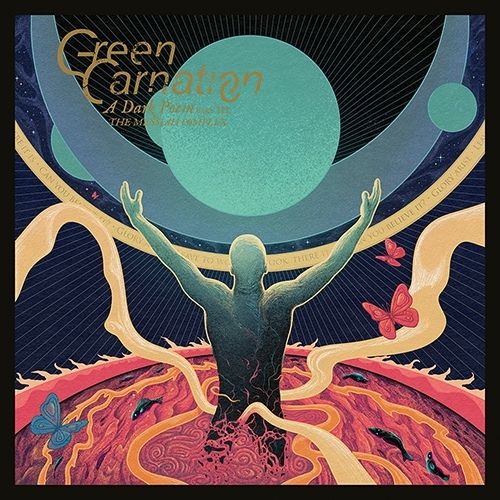
GREEN CARNATION - The Messiah Complex
Dark, progressive, orchestral, and deeply theatrical finale.
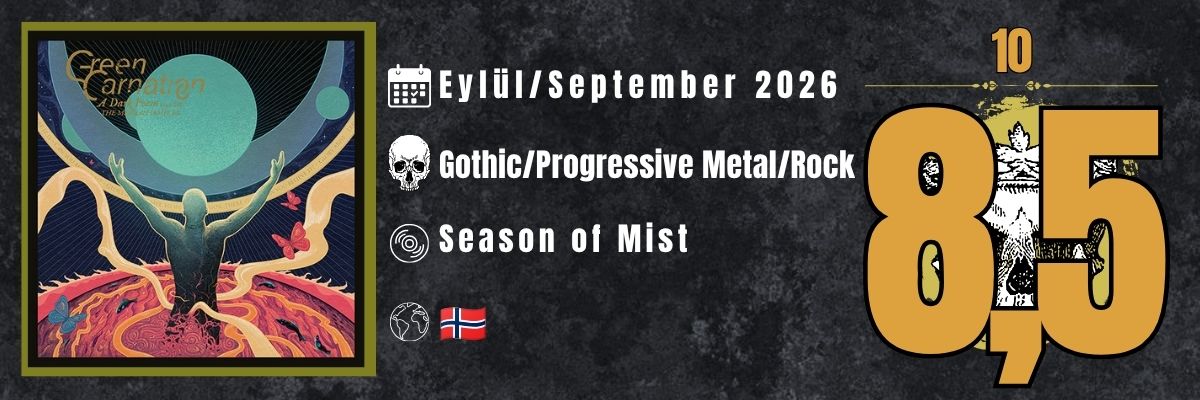
Acoustic Verses was released exactly 20 years ago. GREEN CARNATION has been a part of my life ever since, and it continues to stubbornly hold its special place. For that reason, the final chapter of the "A Dark Poem" trilogy was one of the releases I had been eagerly awaiting. At first glance, the most striking detail about the album is that, rather than simply repeating the atmosphere established by the previous two chapters, the band brings its progressive side to the center of the compositions to bring the trilogy to a close. Opening with "Unconditional Artificial Chemistry," the album is built around heavy, mid-tempo guitars, Stein Roger Sordal's prominent bass lines, and Endre Kirkesola's dark keyboard layers. GREEN CARNATION manages to keep these elements within the same dramatic structure without allowing them to encroach on one another's space, taking the album's narrative power to its highest level.
The roughly six-minute opener begins with soft keyboard lines and electronic/theremin-like textures before shifting its weight toward the guitars and rhythm section. Jonathan Alejandro Perez's drumming serves more to maintain continuity than aggression here; while keeping the song's body steady, it leaves room for Kjetil Nordhus's clean vocals. Sordal's bass tone, meanwhile, does not disappear beneath the guitars; instead, it makes the weight of the riffs particularly pronounced. The song's strength lies in the fact that its melodic structure never clashes with its metal side. The vocal harmonies and piano work in the chorus in particular keep the song from being confined to the "dark progressive metal" mold, bringing the band's more melodic and theatrical character to the forefront.
This is also where GREEN CARNATION's position within the genre becomes important. The band has never remained confined to the boundaries of the progressive metal label; by absorbing rock, folk, gothic, and doom influences into its own compositional approach, it has developed a recognizable language. "The Messiah Complex," however, adds a more pronounced classic progressive rock logic to that language. References such as the structural grandeur of KING CRIMSON or OPETH's dark and atmospheric approach can be heard, but the album never turns them into direct stylistic quotations. Rather, it expands the band's own melodic narrative through more complex rhythmic and harmonic transitions.
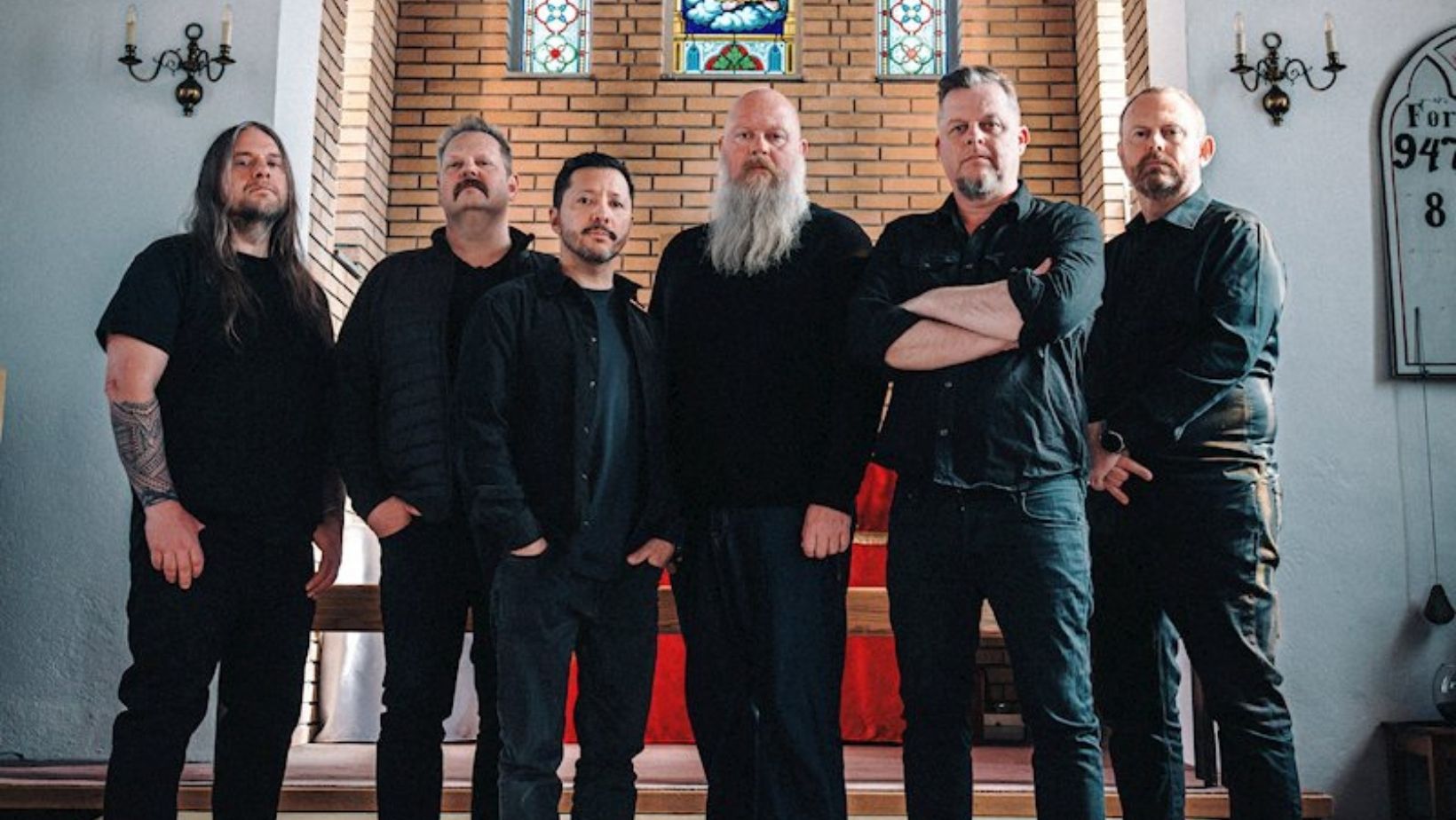
photo by Lars Gunnar Liestøl
The title track is a more refined example of this approach. The song moves forward for a long time without needing a major explosion; Kirkesola's atmospheric keyboards, together with Nordhus's controlled and theatrical vocals, create the sense of emptiness at the song's center. The arrangement is particularly successful here because no instrument rises above the others simply for dramatic effect. The guitars harden when necessary, the keyboards expand the space, and the drums gradually raise the song's dynamic level. The momentum that develops in the second half through Perez's more forceful drum entries sounds less like an artificially imposed "climax" and more like the natural result of the tension already established.
At this point, GREEN CARNATION's melodic approach also becomes one of the album's defining characteristics. "The Messiah Complex" is not a progressive metal track chasing technical showmanship. Structural movement is used for atmosphere and dramatic development rather than virtuosity for its own sake. The restrained, bluesy guitar solo toward the end is functional for precisely this reason. Rather than creating a showcase detached from the song, the solo settles into the existing melodic structure.
"Broken Souls, Common Enemies" is the track that brings the trilogy's metal side most explicitly to the forefront. Across its roughly nine-minute runtime, a constant tension is established between heavier riffs, powerful drum hits, and sections that grow more forceful through the use of clean vocals. Here, the album's fundamental contrast between "lightness and heaviness" becomes most pronounced. Nordhus's clean and melodic delivery coming up against more fragile, guttural vocal passages carries the idea of social and thematic division directly into the song's musical structure.
The element that truly sets the track apart, however, is Ingrid Ose's flute performance. The flute is not used here as a decorative folk flourish; instead, it places a more fluid and organic melodic layer against the sections where the guitars become heavier. In this way, GREEN CARNATION's connection to the progressive rock tradition of the seventies becomes evident not only through keyboards and extended song forms, but also through instrumentation. Even so, this use of the flute is not radical enough to alter the foundation of the band's music. Rather than rebuilding the composition's architecture, the flute adds a second narrative language to the existing structure. This makes it a more controlled choice that expands the band's established aesthetic rather than being experimental for the sake of appearing experimental.
Bjørn Harstad's guitar performance also stands out particularly here. The distortion-free solo, carrying touches of country and blues, creates a deliberate contrast with the song's heavier sections. Its progression toward a more forceful expression makes it one of the most successful arrangement decisions on "Broken Souls, Common Enemies." As Nordhus noted, the fact that the idea for the solo was reshaped during the process is also significant; the resulting version serves the song's dramatic build more effectively rather than simply being more technically flashy.
A similar sense of balance can be found in the album's production. Endre Kirkesola's production and mixing work makes the position of each layer within the composition distinct rather than piling numerous layers on top of one another. The weight of the guitars in the low-mid frequencies, the audibility of the bass, and the wide space used by the keyboards to create atmosphere keep the album away from the overly bright and sterile productions progressive metal sometimes resorts to. This detail matters because GREEN CARNATION's compositions already contain a high number of layers; with a denser mix, the separation between the vocals and orchestral elements in particular could easily have become blurred.
Following the three metal/rock tracks, "A Dark Poem – Orchestral Suite" is not merely the album's closing track, but a retrospective assessment of the entire trilogy from a compositional perspective. Running approximately 16 minutes and 47 seconds, the suite is performed by the Kristiansand Symphony Orchestra and Kristiansand Opera Choir, taking the band's metal identity beyond simply using the orchestra as an embellishment layered on top.
The woodwinds, timpani, and other symphonic textures at the beginning accumulate layer by layer rather than immediately establishing the piece's rhythmic center. The brass sections and strings then enter, expanding the scale of the music. The way the piece contracts and expands between its different movements genuinely fulfills the logic of a classical suite. Here, the orchestra is not being used merely to make GREEN CARNATION's riffs sound more "epic"; instead, it rearranges melodic ideas from the preceding parts of the album within a different compositional language.
This choice is the album's most striking decision from a contemporary progressive metal perspective. The mere presence of orchestration is not particularly bold; symphonic layers have become extremely common in extreme and progressive metal. GREEN CARNATION's distinction lies in treating the final piece almost as an independent classical composition rather than ending the album with an orchestral metal showcase. The reference to the progressive rock tradition of the seventies also gains significance here. They use the relationship between metal and orchestra not merely to amplify heaviness, but to change the scale of the narrative.
There is a price to this decision, however. After the guitar, bass, drums, and vocal-driven flow of the first three tracks, an instrumental suite of roughly 17 minutes changes the album's dynamic center quite noticeably. For a metal-focused listener, this section may feel more like a separate work than a natural continuation of what came before. But when the trilogy is considered as a whole, this sense of disconnection ceases to be a weakness, because the purpose of "A Dark Poem" is to construct a narrative larger than the sum of its individual songs. The suite's length of its own prevents that narrative from being compressed back into a conventional song form at the very end.
Throughout the trilogy, inspired by Arthur Rimbaud's interpretation of Ophelia, themes such as fear of technology, loss of control, social division, power, and humanity's relationship with the systems it has created come to the fore. "The Messiah Complex" addresses these issues musically not by turning them directly into slogans, but through the contrasts within the songs themselves. The constant succession of soft and heavy sections, the confrontation between clean and aggressive vocals, and individual melodies gradually transforming into larger orchestral structures all connect the album's conceptual framework to the music itself.
For this reason, the most important achievement of "The Messiah Complex" is that it does not simply repeat the material from the previous chapters of the trilogy. The broader metal/rock character of "The Shores of Melancholia" and the more introspective approach of "Sanguis" come together here with progressive composition, symphonic arrangement, and a more pronounced theatrical narrative. The result is less an album attempting to break down genre boundaries than a work that tightens the personal language GREEN CARNATION has developed over more than 25 years within a larger compositional framework.
That is why "A Dark Poem, Part III: The Messiah Complex" is not a progressive metal album meant to be consumed quickly. It reveals more detail to listeners who pay attention not so much to the technical complexity of the riffs as to how the arrangements connect with one another. The final suite is important not because the album abandons its metal identity, but because it places that identity within a broader musical form. Here, GREEN CARNATION expands its own genre boundaries to a point where orchestration and progressive structure genuinely become part of the composition. The trilogy's conclusion is therefore more than a "final track": it is a work in which the band tests the melodic, dark, and dramatic language it has long employed against a larger form, carefully navigating the distance between risk and control.

Bandcamp: https://greencarnationsom.bandcamp.com/
Facebook: https://www.facebook.com/GreenCarnationNorway
Instagram: https://www.instagram.com/green2carnation/
Twitter (X): https://x.com/Green2Carnation
YouTube: https://www.youtube.com/channel/UC2vfEaTADayEniT7xbG-XCA
Spotify: https://open.spotify.com/artist/1ZaJhNBAhJ3HjPsWiB9sDc
Apple Music: https://music.apple.com/artist/green-carnation/72866964