
ALBUM REVIEW
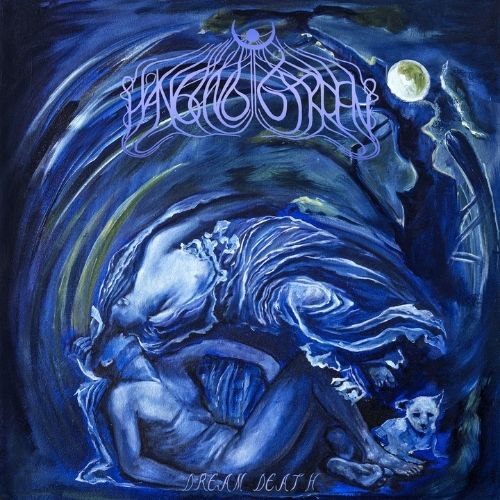
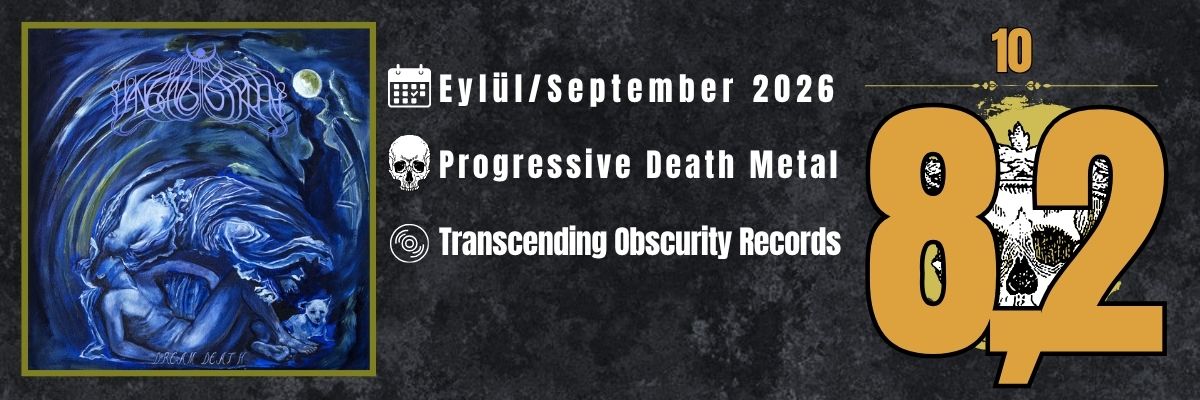
HANGING GARDEN - Dream Death
Chaotic Technical Death Metal Exploration
Hey everyone, I’m back with another review. For Ozan this is of course business as usual, but for me, unfortunately, it’s not. The guy produces like a machine—keeps producing, keeps writing. He fuels himself and drags us into it too.
Ahem, ahem… once again I’ve got a band in front of me straight from the catalogue of Transcending Obscurity Records. HANGING GARDEN is actually the work of a single man. Dylan Cruz (Noxis, Scumbag, Dissonance) is an American guitarist. In his other projects, we can see that he enjoys performing brutal death and technical death metal. So, thinking “what else can I do on my own?”, he sat down at his PC and released an album in 2024. That apparently wasn’t enough for him, because he went on to ask “what more can I add?”, and this year he released the album Dream Death. And honestly, he did well.
The album moves through pure chaos, but there’s such a dark structure lurking underneath that the clean touches in the guitars pull you into completely different dimensions. You’re very likely to encounter a wide range of variations throughout the record. Let me put it this way: it’s quite possible that you’ll catch a lot of details I missed. Within the album you can pick up traces of both DEATH and Xenosis.
Here, Dylan merges classic death metal frameworks with progressive, technical, and at times black metal textures. The fact that he built all of this entirely on his own is impressive. When listening, it doesn’t feel like something coming from a computer—it has a live, organic feel. You might even get early Opeth vibes :)
Opening with “Arete,” the album, despite being highly technical, evolves through Dylan’s approach to riff writing as if it isn’t telling a story but rather behaving like an ever-shifting organism. The riffs are technical but never showy. There are blast beats on the drums, but rather than just keeping time, they keep the energy alive and build tension together with the guitars, which is a great approach.
While bass is often pushed into the background in death metal, here it increases the weight of the riffs. In some transitions, instead of following the guitars, it moves differently in the low frequencies and adds depth to the tracks. The vocals, meanwhile, carry no concern for intelligibility. Tone and aggression take priority over words.
As for the atmosphere of the album, it feels like we’re inside a waking nightmare. It’s as if our mind keeps generating new images, and we can’t hold onto any of them. That’s why the songs may feel chaotic on first listen, but with repeated spins, every riff starts to fall into place.
Another thing I like about Dylan is that he doesn’t completely abandon melody, instead leaving behind short melodic cues that the ear can latch onto even in the most chaotic moments. This prevents the album from becoming just a technical showcase. The same melodic core is sometimes presented through tremolo picking, sometimes through different harmonies, sometimes by shifting rhythmic accents. While listening, you think “I’ve heard this riff before,” but in reality, it shows a different face each time.
This approach preserves the spirit of old-school death metal while also reminding you of progressive thinking. The technicality is not used for show—it’s used to create tension. That’s why, despite its complexity, it never feels cold or mechanical.
The album also avoids expectations like “here comes the solo” or “this is where the chorus kicks in.” The guitars almost talk to each other—one starts a sentence, the other twists it into a completely different direction. If you were to describe the album in general, it feels like being inside a fog-covered labyrinth; every corner you turn makes you think you’re back in the same place, but the architecture keeps changing.
If you think of this as a guitar album, the variety in guitar work alone creates that sensation. Familiar, yet never the same. The essence of Dylan’s strength lies here: he turns progressive elements from a mathematical exercise into the natural language of the songs.
All in all, Dream Death is an impressive record on first listen, and an even richer one by the fifth. I definitely recommend it for anyone who enjoys technical music. My only criticism is that 40 minutes is quite long for this album. If it had been trimmed down to around 30 minutes, it would have been much easier to digest. But there’s nothing to do about that :(
Ozan, thanks for the pass—much love.
HÜS
Hanging Garden Bandcamp
Official Transcending Obscurity Site
Transcending Obscurity Facebook
Hanging Garden Facebook
Hanging Garden Instagram
Official Label YouTube Channel
Label US Store
Indiemerch Store
Label Europe Store