Album Review
Scatter - Tech Hell Cyber Thrash
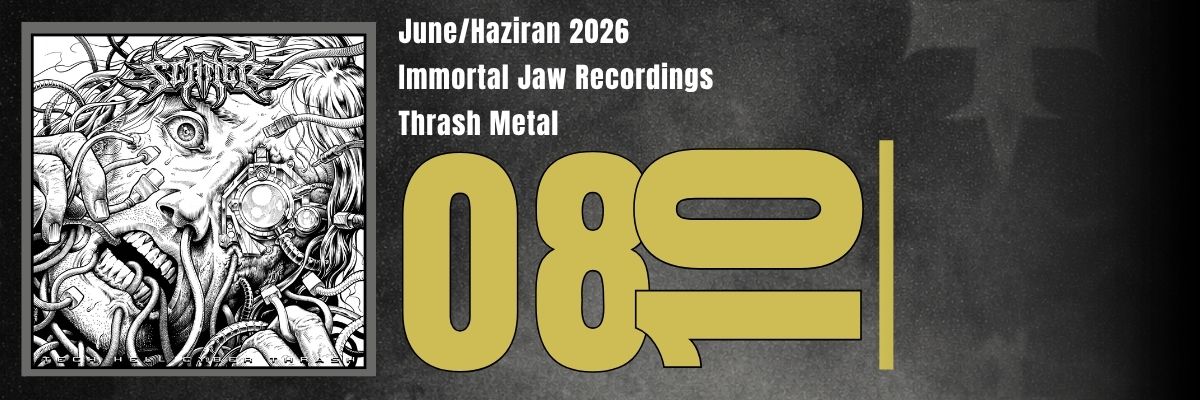
SCATTER’s debut EP Tech Hell Cyber Thrash operates less like a “retro assault” attempting to simply reproduce nostalgic thrash references, and more like a record that places a specific aesthetic concept at the center of its riff organization. The EP’s core identity does not stem solely from speed or aggression, but from fragmented riff transitions that create the sensation of constant data overflow, abrupt directional shifts, and the way it constructs digital-age paranoia through a mechanized thrash language. The EP’s “cyber” emphasis never remains a superficial thematic decoration here; it transforms into an organizational logic that directly shapes the way the music moves.
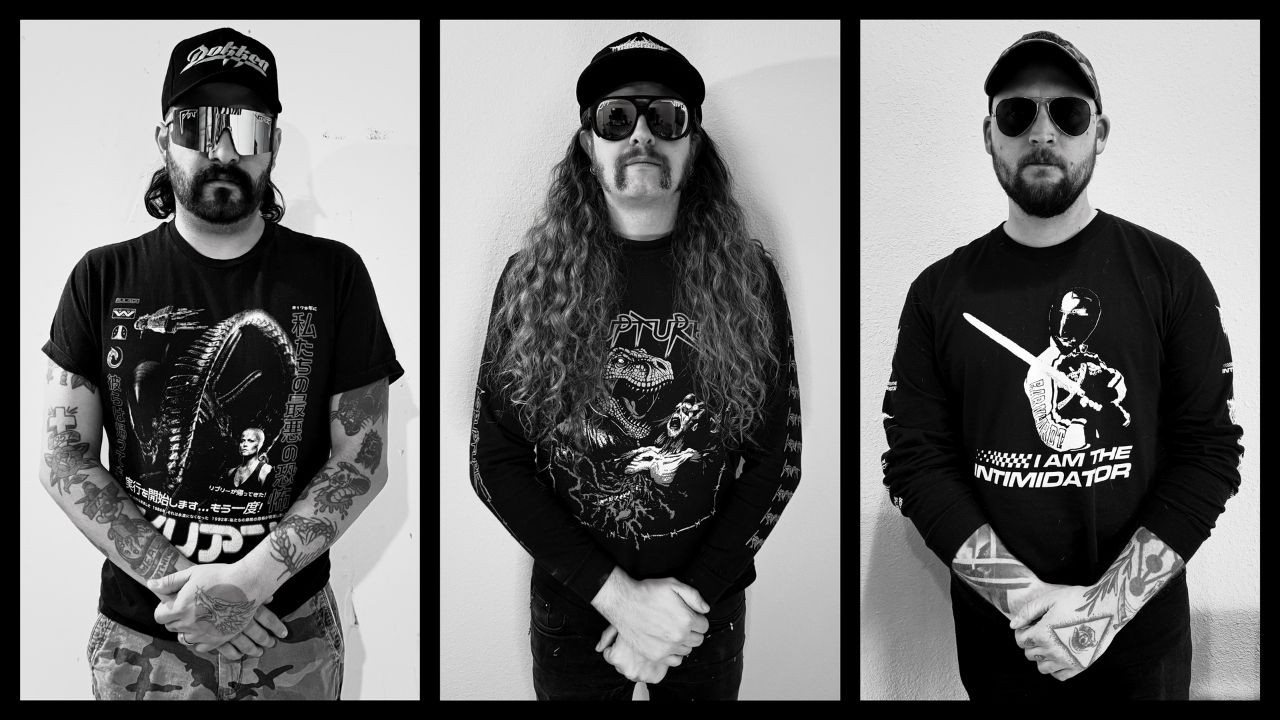
Opening track “Punching Deck” merges classic Bay Area-derived thrash velocity with modern death/thrash density, while the guitars’ constantly shifting riff structures deliberately disrupt the track’s linear flow. The point here is not simply playing fast, but allowing the riffs to progress without ever fully “locking” into one another. This becomes especially apparent in the moments where hard, palm mute-driven transitions collide with harmonized lead work. One of SCATTER’s most striking qualities emerges precisely at this point: the band can generate a sense of complexity without leaning on technical showmanship. The songs never become progressive, yet the constantly tightening and shifting structures also refuse to allow a stable groove space to fully form.
Throughout the EP, the Voivod influence can be heard not only in the use of dissonance, but also in the geometric behavior of the riffs themselves. Tracks like “404” and “Cyberwar Criminal” preserve a classic speed/thrash backbone while steering chord relationships away from clean, predictable resolutions. The dry, harsh, mid-frequency-heavy guitar tone further reinforces this sensation. The Earhammer Studios production plays an important role here: the recording remains organic without collapsing into the sterile precision of modern extreme metal production. The natural resonance of the drums — especially the snare — alongside the guitars’ slightly dirty upper-frequency texture ironically makes the album’s “industrial digital coldness,” associated with hacker culture, feel more physical and grime-covered. That choice separates the EP from contemporary thrash revival acts because SCATTER’s music sounds less like a polished nostalgia product and more like a system sabotage recorded in a basement between piles of cables.
Ruben Cantu’s lead guitar approach is one of the record’s key turning points. Rather than turning solos into pure demonstrations of technical density, as many modern thrash bands tend to do, the harmonized leads and brief melodic expansions instead create temporary breathing space within the songs’ constantly compressed rhythmic structures. Yet these melodic moments never reach a traditional heavy metal “sense of triumph”; the harsh rhythmic returns that immediately follow drag the songs back into uncontrolled data flow. This directly aligns with the EP’s cyberpunk aesthetic: moments of temporary clarity are continuously interrupted by systemic pressure.
The vocal approach is deliberately prevented from becoming a narrative focal point. The vocals function mostly as an extension of the rhythmic attack rather than stepping ahead of the riffs. This decision serves the character of the record because SCATTER’s primary focus is not dramatizing lyrics, but maintaining the kinetic pressure that constantly drives the music forward. “Y2K Killer” stands as one of the clearest examples of this approach; the track moves with an urgency that nearly reaches crossover thrash energy while constantly shifting between death metal severity and speed metal dynamism.
The EP’s short runtime is also an important structural decision. Rather than expanding its ideas, this five-track release chooses to compress them. At times this creates the impression that certain songs end before fully developing, but that also aligns with the EP’s aesthetic logic. SCATTER is not a band attempting to overwhelm the listener through massive compositions; instead, it constructs a framework built around short-duration yet high-intensity data bursts. For that reason, the EP’s greatest strength lies less in “songwriting maturity” and more in the way it controls energy.
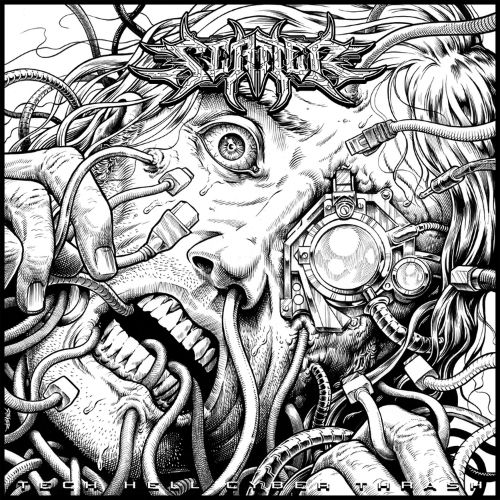
The cover artwork by Matt Stikker also functions in harmony with the music’s direction. While the visual aesthetic combines the comic book-like violence of classic thrash imagery with cyberpunk iconography, it reinforces the hybrid character of the album’s musical approach. More importantly, however, the visual world never overshadows the music itself. Unlike many modern retro-thrash projects built on an “aesthetic first, riffs second” mentality, the visual presentation here already feels like an extension of the kinetic chaos embedded within the music.
Tech Hell Cyber Thrash is not a record that radically rewrites the boundaries of the genre. But that is not where SCATTER’s success lies. The band attempts to escape the trap of nostalgic imitation that contemporary thrash so often falls into by directly integrating rhythmic instability and cyberpunk aesthetics into the architecture of its riffs. The EP’s greatest strength is that these ideas never remain merely decorative. SCATTER does not yet sound like a band that has fully stabilized its own language, but it is precisely that sense of instability that gives the music its identity. Particularly at a time when contemporary thrash is becoming increasingly cleaner, calculated, and algorithmic in its production mindset, SCATTER’s mechanical yet filthy aggression manages to carve out a space of its own.