
ALBUM REVIEW
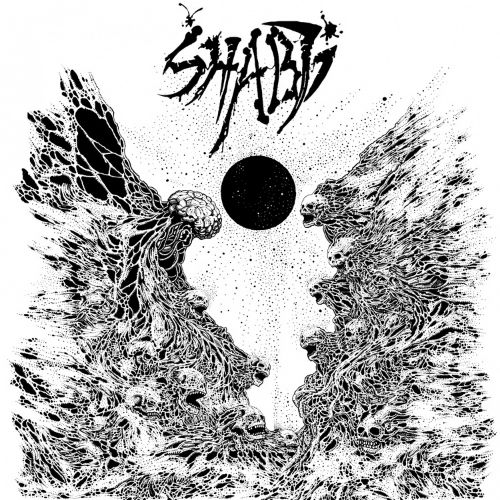
SHABTI - Haze, Cacophony, And White Light
Technical, chaotic, progressive, and dark black/death.
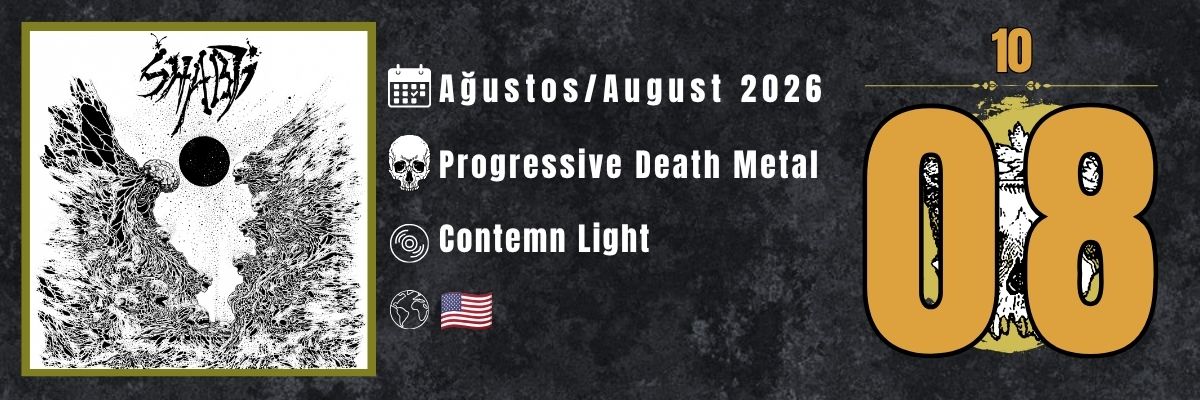
SHABTI bring together the sharp riff geometry of technical black/death metal with progressive structural shifts, but on "Haze, Cacophony, And White Light", they do not build their music solely around speed and technical showmanship. With riffs constantly changing direction and the rhythm section balancing that movement with heavy, sharply defined hits, the album demands that listeners follow the structural connections within its compositions. The Maine-based band's third album blends the dark aesthetic of black metal with the calculated aggression of technical death metal, carving out a narrow but clearly defined space of its own.
The band's third album, "Haze, Cacophony, And White Light", does more than simply push the familiar speed and intensity parameters of technical black/death metal; it binds them to a more deliberate compositional approach built around constantly shifting riff geometries. On one hand, the guitars move through sharp tremolo lines, legato passages, and choppy accents borrowed from thrash metal; on the other, they retain the physical weight of death metal. As a result, the album's complexity never becomes a random display of technicality; instead, it functions as a structural element that determines the fundamental behavior of the songs.
Rob Cook's guitar work sits at the center of this approach. The riffs frequently change direction, but these shifts are not simply a matter of tempo or meter changes. Tremolo picking and blast beats establish a sense of continuity in the faster passages, while technical death metal-derived breaks fracture that flow. The juxtaposition of choppy accents and legato passages in "Blood For A Blessing" is a clear example. Rather than presenting two separate riff languages one after another, SHABTI weave them into each other. The result is a structure that continually forces the listener to reestablish the song's tonal and rhythmic center.
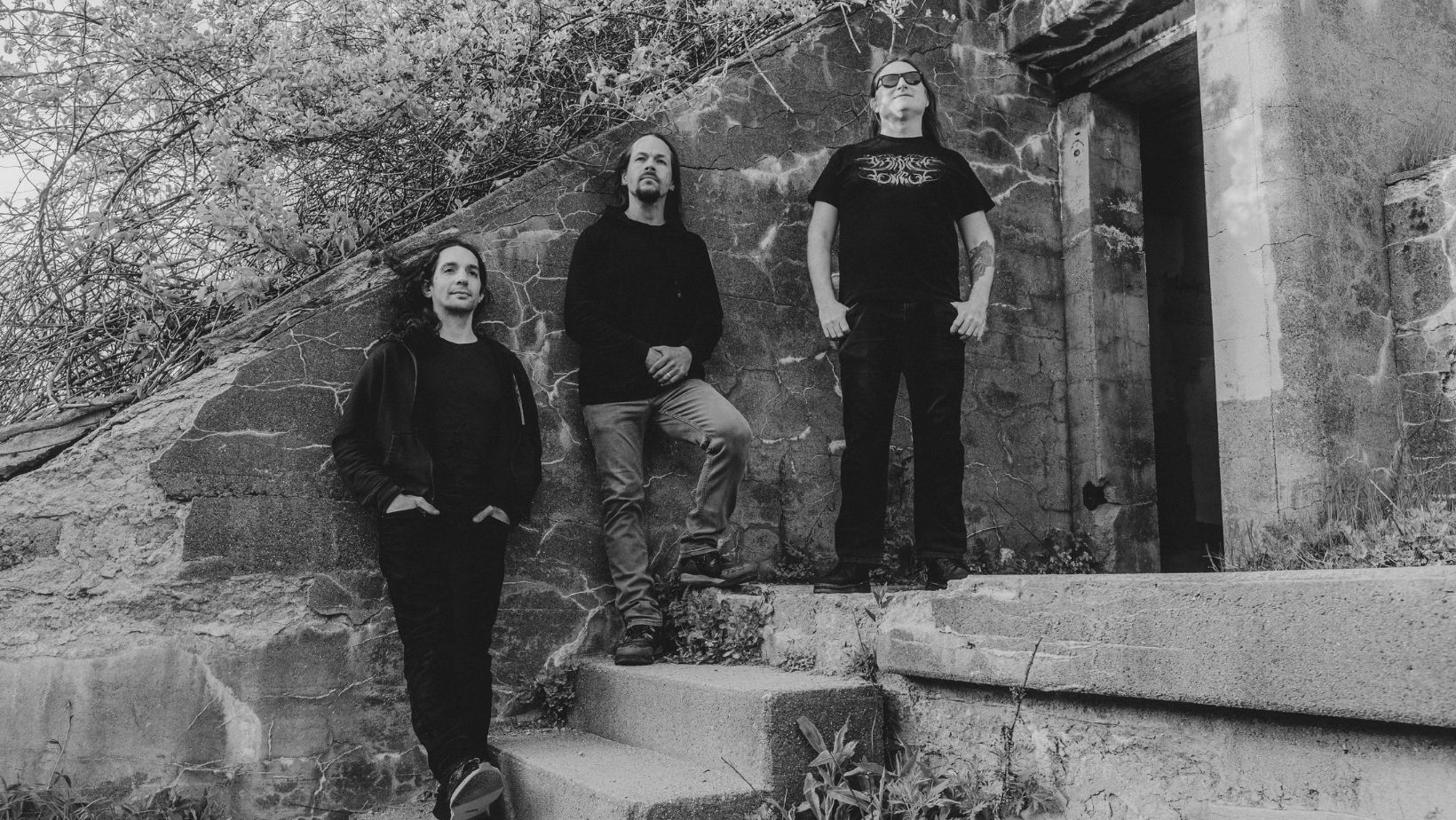
Ray Capizzo's drumming is not merely an accompaniment sitting behind this complexity. While blast beats provide the driving force for the high-speed passages, the rhythmic density is reduced in the slower and mid-paced sections, giving the guitars room to change direction. The album's range of tempos across its six tracks is therefore significant: rather than remaining at full speed throughout, SHABTI build tension through slowing down, moving forward, and accelerating again. The thrash-leaning groove of "Rise Of The Shabti" provides a more immediate rhythmic anchor, even within the album's technical black/death framework.
Brendan Hayter's bass, meanwhile, brings the album's low-end backbone into sharper focus, particularly amid the dense layers of guitar. The thick bass tones described in the source material preserve the music's physical weight as the technical riffs fracture and reassemble across the upper frequencies. This distinction matters, because SHABTI's fundamental challenge is not a lack of technical ability but, quite the opposite, how to turn that ability into a cohesive whole that the listener can follow. Keeping the bass prominent prevents the complex guitar writing from becoming an entirely abstract exercise.
The vocal approach also directly reinforces the band's position between black and death metal. Rob Cook's death metal growls periodically give way to black metal screams, while some of the growls carry a filthy yet distinct melodic nuance. Brief clean vocals appear in the background, but they are not prominent enough to alter the album's overall vocal character. What matters here is that the clean singing creates contrast without redefining the album's fundamental aesthetic language. Rather than explaining the music's already considerable density, the vocals function as another layer within it.
The album's longest track, "A Weary Creation", provides the clearest expression of SHABTI's compositional approach. Despite running for around ten minutes, it does not follow a straightforward progressive metal narrative. The numerous shifts throughout the track continually redirect the music rather than building toward a conventional grand climax. At the same time, one of the notable points highlighted in the first source is the band's ability to move forward with a surprising degree of consistency despite its length. By avoiding the compulsion to fill every second of technical music with a new idea, the track's duration does not become mere showmanship.
"Haze, Cacophony, And White Light" serves as the conceptual center of the album. While the lyrics intertwine childhood, trauma, religion, alienation, and the pressures created by the physical environment, the music does not simply translate that narrative directly; instead, it creates a constantly destabilized perspective. The shifting riffs heard throughout the album embody the ideas of "haze" and "cacophony" in the title not as aesthetic decoration, but as part of the compositional logic. The band's achievement lies in not allowing the chaos to become completely uncontrolled: beneath the songs, there remains a clearly defined technical death metal framework.
SHABTI's lyrical approach likewise parallels the music's movement between genres. "Ambrosia And Lamb’s Blood" constructs a narrative targeting organized belief, manipulation, and religious authority, while "A Weary Creation" brings personal trauma and the expectation of religious salvation into the same frame. "Blood For A Blessing" proceeds through more nightmarish and fragmented imagery. "Sojourner" addresses death, loss, and a search directed toward the afterlife, while "Rise Of The Shabti" expands the scale beyond the personal and mythological into class, exploitation, and humanity's future. Particularly in the final track, the privileged being sent into space, the workers who are left behind to carry them there, and the eventual succession of humanity by the Shabti figures connect the album's mythological language to dystopian science fiction.
This thematic expansion also helps explain the band's position within the genre. SHABTI are not pursuing the atmosphere of traditional black metal as such; they place black metal's tremolo and vocal aesthetic, death metal's physical weight, and the structural movement of technical/progressive metal within the same compositional system. While technicality in contemporary extreme metal is often presented through sterile production and flawless execution, SHABTI's approach carries a harsher and more organic aggression. What is striking is that their technical ability is used not for display, but to continually disrupt the listener's sense of direction within the songs.
The production is strong and clean enough to support this approach. The clear separation of guitars, bass, and drums is a significant advantage in arrangements this dense. Yet clarity does not eliminate the music's complexity. On the contrary, making the details easier to hear can sometimes make the album harder to follow, because so many riffs, rhythmic breaks, and vocal layers are operating simultaneously. This reveals the central paradox of "Haze, Cacophony, And White Light": the professional production brings its technical details into focus, but the sum of those details does not make the album any easier to consume.
That is both the album's strength and its limitation. SHABTI push the technical tendencies of contemporary blackened death metal forward not by adding more layers, but by destabilizing the composition itself. In return, they ask the listener to move away from a straightforward riff-centered approach and keep pace with songs that are constantly reshaping themselves. Despite the more pronounced thrash groove of "Rise Of The Shabti", the album's overall character never settles permanently into that realm of accessibility.
For that reason, "Haze, Cacophony, And White Light" is a record that readily displays its technical proficiency while establishing its true identity by deliberately keeping its distance from accessibility. SHABTI's expansion of their black/death metal foundation through progressive and technical arrangements genuinely alters the music's compositional logic; the ideas employed never remain merely decorative. The trade-off is an album aimed at a narrow but clearly defined audience. Rather than simply asking the listener to decipher technical details, it demands a form of listening that attempts to find its bearings within constantly shifting structures, and that is precisely what sets it apart from the more predictable trajectory of technicality in contemporary extreme metal.

https://www.instagram.com/shabti_official
https://www.facebook.com/metalshabti
https://linktr.ee/contemnlight
https://contemnlight.bandcamp.com