
ALBUM REVIEW
Sněť - V bažinách vědomí
Expands old-school death metal with finesse.
Emerging from Czechia’s underground death metal scene, Sněť are taking the rotten, direct sound established on their debut, “Mokvání v okovech”, into a more dynamic, layered and atmospheric framework with “V bažinách vědomí”. While retaining the crude riffing tradition of ’90s death metal, the band expands its compositional approach, bringing groove, tempo shifts and dark melodic textures together within the same compositions. Arriving after a five-year gap, this second album demonstrates just how far Sněť can deepen their own sound while remaining within the boundaries of old-school death metal.
On “V bažinách vědomí”, a more mobile compositional approach replaces the simple but weighty riffs of the debut, while Sněť retain the death metal backbone of their first album and rebuild it around more varied tempos and layered arrangements. The ominous chords, chiming cymbals and rolling toms that emerge at the album’s opening raise the rhythmic tension from the outset rather than simply leaning on groove. Yet this added sophistication does not eliminate the band’s fundamental instinct: the riff remains at the center, creating physical weight rather than technical spectacle.
One of the most noticeable changes on Sněť’s second album is the guitar tone. Compared with the more stripped-down and raw character of “Mokvání v okovech”, the guitars here have a more organic, warm sound that carries the character of old-school equipment. Hnisatel and Ransolič retain the rotten groove sensibility of the Autopsy school while introducing more breaks, shifts in direction and unexpected transitions into their riffs. Yet this variety never pushes the songs into technical death metal territory. Instead, the complexity remains subordinate to the physical function of the riff. As a result, the songs contain more ideas while remaining direct and immediately graspable.
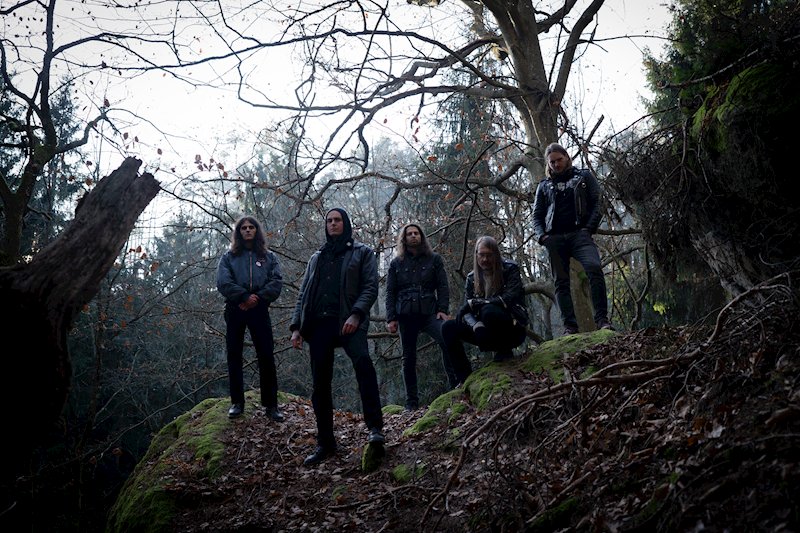
This approach is particularly effective in the mid-tempo passages. Sněť are at their strongest when they use repetition not as a weakness, but as a blunt-force tool. The groove structures work through rhythmic weight rather than melodic ornamentation, while the blast-beat sections that follow break that weight apart, injecting sudden speed and unease into the songs. Krutörr’s drumming never attempts to overshadow the guitars, but neither does it merely provide a backing pulse. The blasts, tom runs and tempo changes respond to the guitars’ constantly shifting structures. In turn, the rhythm section becomes one of the key forces shaping the arrangements without ever becoming ostentatious.
Hrdlořez’s bass work is another important part of this sonic architecture. The thick, dirty character of the bass does more than simply fill out the guitars’ low frequencies; combined with the cavernous drum tone, it increases the album’s physical density. Particularly in the mid-tempo grooves, the dense mass created between guitar and bass is what makes Sněť’s death metal not merely fast, but heavy. This is why even the album’s more atmospheric passages never feel detached from the music’s central body.
Řád Zdechlin’s vocals do not feel like a layer simply placed on top of this structure. His deep, muffled and rotten-toned vocals are brought forward at precisely the right moments in the mix, settling into the dark spaces created by the guitars. The use of Czech also goes beyond being a mere linguistic choice. It helps position Sněť’s death metal outside Anglo-American conventions and creates a distinction that recalls the distinctive vocal identity of Czech metal acts such as Root, Törr and Master’s Hammer. This does not directly transform the music into another genre, but it does connect the band’s old-school death metal aesthetic to a specific geographical character.
The album’s arrangements also allow for more movement than those of the debut. Rather than locking the guitars and rhythm section into the same motif for extended periods, the constant introduction of new variations makes the songs feel faster in perception. At the same time, Sněť do not sacrifice the memorability of their riffs. On the contrary, the balance between complexity and directness is one of the album’s central compositional strengths. The use of acoustic passages is important in this respect as well. These sections are not merely decorative contrasts; by deliberately creating space within the dense guitar textures, they increase the impact of the heavier passages that follow.
This is also where “V bažinách vědomí”’s approach to atmosphere comes into play. At times, the album leans into heavier passages that approach the boundaries of death-doom, but it never fully gives itself over to death-doom logic. Rather than simply slowing the songs down, the slower passages create a dark space around the tension generated by the faster sections. “Ve stínu slunce” is one of the clearest examples of this approach. Its horror-cinema aesthetic, reminiscent of Necrophagia, does not feel like an atmosphere pasted onto the riff structure from the outside; it functions as part of the arrangement alongside the tempo changes and melodic lines. The melancholic melodic character of the lead guitars, occasionally reminiscent of Finnish death metal, further broadens the album’s sonic palette when combined with its rotten rhythmic foundation.
This atmospheric expansion is significant because Sněť do not use it to shift the center of their music in the way contemporary experimental death metal often does. They are not seeking radical expansion through saxophones, synths or other genre-external instrumentation; the evolution happens directly through guitars, tempo and arrangement. As a result, the album’s progression remains measured. The band are not trying to invent a new genre; they are reshaping the legacy of ’90s death metal through a more flexible compositional approach.
The production complements this decision. Recorded by Amák Golden at Golden Hive Studio and mixed and mastered by Greg Wilkinson at Earhammer Studios, the album favors a warm yet crushing sound that emphasizes vintage character rather than the excessively clean and separated approach common to modern extreme metal production. The dirty texture of the guitars, the murky weight of the bass and the spacious, cavernous character of the drums behave not as competing elements but as parts of the same physical mass. In this respect, the production does more than imitate the old-school death metal aesthetic; it becomes a deliberate tool that supports the band’s continued reliance on primitive, crude riffing.
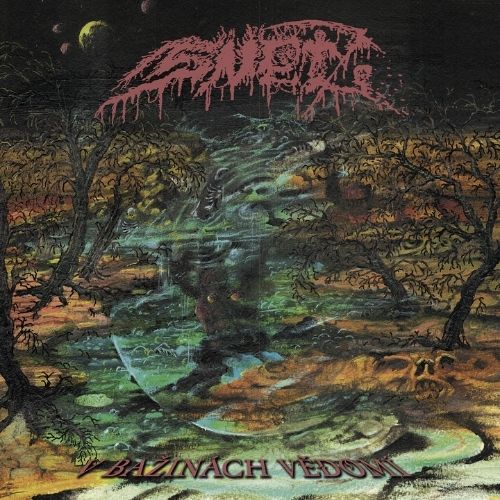
The fact that the cover artwork was created by Řád Zdechlin also strengthens the coherence Sněť establish between their music and visual identity. The album’s aesthetic world of rot, swamps and unease is not detached from the way the music itself is produced. Rather than simply repackaging the grotesque traditions of death metal, the visual identity serves as a framework that complements the organic sense of decay embedded in Sněť’s sound.
Looking for radical innovation in Sněť’s music would be missing the point. The real concern of “V bažinách vědomí” is demonstrating just how far old-school death metal can be expanded without compromising its fundamental riffing logic. There are moments that faintly evoke the more mobile structures of early Atrocity or Incubator’s approach to pushing against the boundaries of traditional death metal, but Sněť do not use either as a direct template. Instead, they preserve their own discipline as riff writers while exploring different corners of the same tradition.
Ultimately, the album’s strength lies in its refusal to appear experimental for the sake of it. Sněť expand their territory through controlled adjustments to tempo, guitar tone, atmosphere and arrangement while retaining the genre’s historical codes. “V bažinách vědomí” opts for an organic, dirty sound in opposition to the increasingly sterilized production tendencies of contemporary death metal, while also carrying the directness of the debut into a more varied compositional framework. It demands an active ear that follows the changes between riffs rather than a listener searching for technical complexity; in return, it manages to keep the brute force of traditional death metal in the same mold as a more refined compositional approach.
