ALBUM REVIEW
Stonecast – Expand Crimson Chaos
Epic Presentation by a French Heavy Metal Band
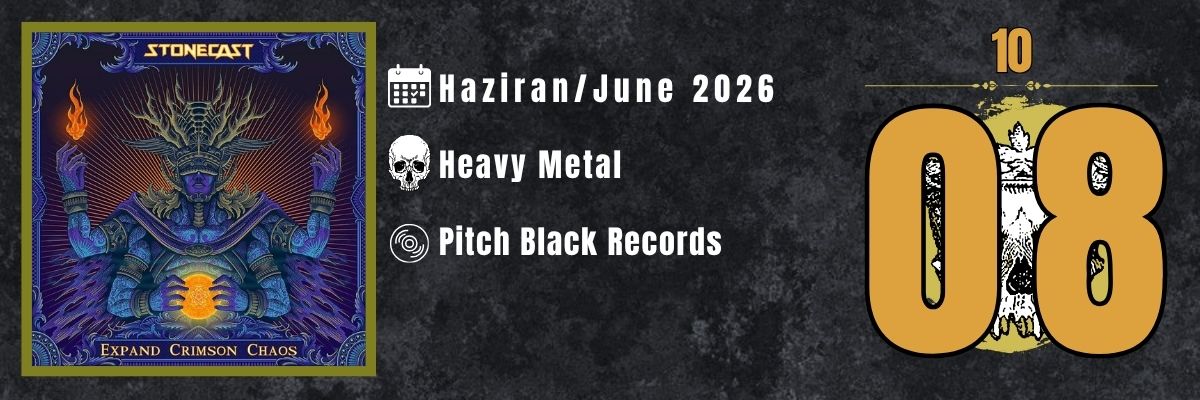
Stonecast, a French band that reinterprets the legacy of classic Heavy Metal through modern touches, draws attention with music built around epic narratives and powerful riff structures. Based in Marseille, the band has developed its own approach by combining the melodic strength of traditional Heavy Metal with the dynamics of Power Metal, dark atmospheres, and progressive transitions. With Expand Crimson Chaos, released after a break of more than seven years, the band both continues the path established in its past and reveals its desire to expand its musical boundaries.
With Expand Crimson Chaos, Stonecast delivers an album that does not step back from the grand gestures of classic Heavy Metal; instead, it consciously embraces the genre’s exaggerated and theatrical qualities. The Marseille-based band’s fourth full-length brings together the core elements of the genre — powerful riffs, soaring vocal melodies, memorable choruses, and guitar-driven arrangements — with a modern production approach. However, the album’s true identity does not come merely from repeating the formulas of the past; it emerges from the band’s attempt to expand that language through Power Metal dynamics, Doom-influenced heavy passages, occasional Thrash aggression, and progressive transitions.
The album opener “Death” immediately summarizes the band’s approach. Rather than launching into a fast-paced introduction, Stonecast chooses to establish tension through atmospheric synth textures and a slow-moving guitar foundation. The track deliberately breaks away from the common Heavy Metal album formula of reaching for an immediate peak in the opening song. Franck Ghirardi’s vocals adapt naturally to this structure, moving between low-register narrative passages and powerful high-register bursts. His performance supports the song’s dramatic storytelling without overshadowing the composition itself.
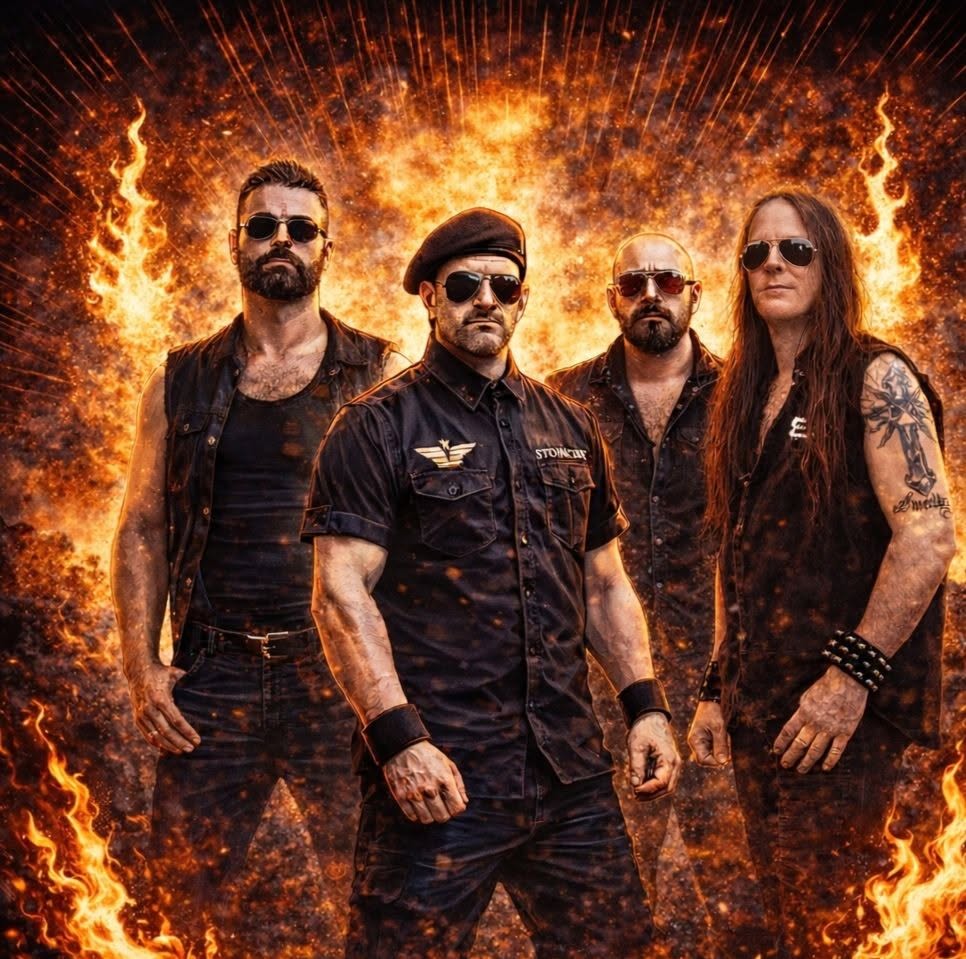
Following this heavy opening, “Walking Dead” reveals the album’s traditional Heavy Metal identity more clearly. Seb Casula’s guitar writing is not based solely on basic chord progressions; subtle melodic shifts and harmonic changes add depth and improve the track’s staying power. The rhythm section maintains the driving character associated with classic Metal. Combined with the song’s Western atmosphere, the zombie-themed narrative creates a concept that could easily have fallen into cliché territory. However, Stonecast approach the theme with musical conviction, allowing the track to become more than a mere backdrop and turning it into a part of the album’s broader world.
With “Blood Red”, the band moves into darker territory. Sharper guitar tones and a more aggressive vocal delivery show that the album is not confined to a purely melodic Heavy Metal direction. The Thrash influences here do not create a direct genre shift; instead, they are used as a tool to intensify the aggression of the riffs. Stonecast’s movement between different styles generally grows out of the thematic needs of each song. As a result, the album feels less like a collection of random stylistic changes and more like a structure that opens into different narrative spaces.
The French-language track “A Ce Lieu” is one of the clearest demonstrations of the band’s melodic side. Its compact rhythmic structure and guitar melodies support the dramatic delivery of the vocals. What stands out here is that the band creates emotional weight not through massive orchestrations, but through the arrangement itself. The piano and vocal version of the song is also significant in this regard; the fact that the composition remains intact when the Metal identity is stripped back shows that the track does not rely solely on heavy guitar tones.
At nearly six minutes, “Against the Tide” stands as one of the album’s most balanced compositions. This is where Stonecast achieve their strongest result in combining different ideas within a single arrangement. Galloping rhythms, acoustic sections, melodic transitions, and a large-scale chorus do not feel like disconnected pieces stitched together. Brent E. Smedley’s drumming plays an important role here. Rather than constantly highlighting his technical ability, the experienced drummer responds to the needs of the arrangement, adding weight during transitions while allowing the quieter sections room to breathe.
“King of Hell” takes a more direct approach. Its faster guitar movements and near-Thrash intensity create a different energy within the album, but the track feels somewhat more isolated in terms of flow compared to the songs surrounding it. This highlights the line between the album’s greatest strength and its weakness: Stonecast are never afraid to introduce new ideas, but this variety can occasionally weaken the overall cohesion.
“Kneel or Die” is one of the band’s most direct tributes to its classic Heavy Metal roots. Its anthemic riffs, massive chorus, and straightforward title embrace the genre’s traditional codes without any sense of distance or irony. While many bands today reinterpret classic Metal aesthetics through a modern, self-aware lens, Stonecast approach this language with complete sincerity. This choice aligns with the album’s overall philosophy: Expand Crimson Chaos is not about creating nostalgia, but about reusing the storytelling methods of old-school Metal through a contemporary production approach.
The title track “Expand Crimson Chaos” serves as the central point where the album’s different elements come together. Lionel Antonorsi’s bass work is particularly noticeable here; rather than being pushed into the background of the mix, it carries the song’s weight alongside the guitars. The balance between the guitars’ heaviness and melodic direction strengthens Ghirardi’s chorus performance. The track succeeds not because it attempts to appear larger than life, but because it is built on a genuinely strong compositional foundation.
“Gundown the Flag” reveals the band’s more experimental side. Classic Metal riffs are combined with spoken passages and almost theatrical transitions. However, the necessity of this approach within the album’s overall musical logic remains debatable. While the ideas are interesting, some sections serve more to expand the concept’s boundaries than to deepen the atmosphere. The experimentation is not unsuccessful, but it becomes less effective when it moves away from the album’s strongest qualities: riff construction and songwriting.
From a production standpoint, Expand Crimson Chaos follows modern Heavy Metal standards without becoming overly sterile. Christophe Boin’s mixing and mastering preserve the details of the guitars while also bringing the bass into clearer focus. The drums are powerful and well-defined, while the vocals are mixed to carry the melodic structures effectively. Some of the denser arrangements could have benefited from more space between the instruments; particularly in sections where multiple ideas enter at once, the sonic landscape occasionally becomes crowded.
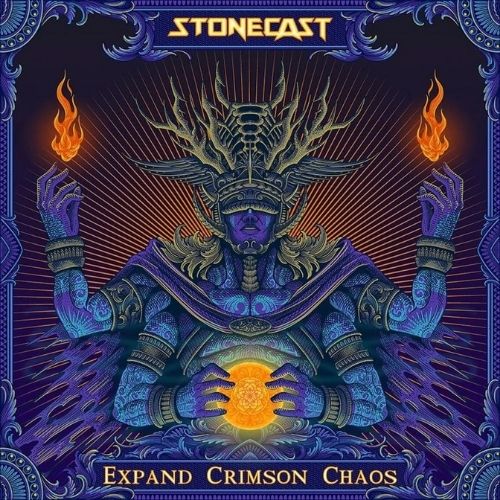
The album’s visual identity also moves in parallel with its musical approach. The fantasy figure on the cover, dominated by shades of blue, purple, orange, and gold, reflects the band’s deliberate embrace of a grandiose Heavy Metal aesthetic. This visual language separates itself from the minimalist and darker artwork trends often seen in today’s extreme metal scene. However, the choice does not contradict the music; instead, it supports the album’s structure built around larger-than-life narratives, battle imagery, and theatrical melodies. The visual presentation functions not as mere decoration, but as part of the album’s artistic framework.
Expand Crimson Chaos is not a record that redefines the boundaries of Stonecast’s genre. Rather than expanding the fundamental tools of Heavy Metal, the band demonstrates that these tools can still remain effective. The album’s strength lies in the fact that it does not use classic riffing merely as a reference to the past; it combines that foundation with progressive transitions, different atmospheres, and broader narrative structures.
At the same time, the album demands a listening approach that is less about patience and strict cohesion, and more about remaining open to movement between different Metal traditions. Stonecast are at their strongest when they support their larger ideas with strong song structures. The more experimental moments, meanwhile, occasionally take on a secondary role beside the band’s main identity.
Expand Crimson Chaos is an album that does not hide the flamboyant side of classic Heavy Metal, reshaping it through contemporary production and a variety of genre influences. Stonecast are not creating an entirely new language here; instead, they keep an existing one alive through powerful riffs, distinctive vocals, and carefully crafted arrangements. The album’s true value lies precisely in this approach: treating the grandeur of Metal’s past not as a museum piece, but as a living musical tool that can still be put to use.
OZAN