ALBUM REVIEW
VORAX – Volcano Shock
Old School Death Metal Reborn
Zürich-based VORAX bring the raw energy and physical weight of Old School Death Metal into the modern scene with Volcano Shock. Formed by experienced musicians from bands such as MESSIAH, OMOPHAGIA, and DEATH KOMMANDER, the five-piece reshapes the fundamental dynamics of classic Death Metal through an analog production approach and a distinctive prehistoric concept. Built around dinosaurs, volcanoes, and the struggle for survival, this debut full-length reveals a band that remains connected to the past without surrendering to nostalgia.
One of the greatest challenges facing Old School Death Metal today is reusing the aesthetic codes of the past without falling into a cycle of purely nostalgic repetition. With Volcano Shock, VORAX emerge as a band attempting to find that balance directly through their riff writing. The foundation of the album is clear: down-tuned guitars, heavy-moving rhythms, a physical drum performance, and a production philosophy that deliberately keeps its distance from digital perfection. Yet the band’s true achievement lies not in copying the formal elements of early Death Metal, but in making the weight and dynamism behind those elements functional again.
Clocking in at approximately 33 minutes, Volcano Shock maintains a compact eight-track structure without unnecessary expansions. VORAX’s musical world is directly connected to the album’s thematic framework: volcanic eruptions, prehistoric creatures, natural disasters, and the struggle for survival. While this concept could initially appear to be little more than a visual ornament, the band does not limit it to the lyrics; the weight of the riffs, the organic movement of the rhythms, and the natural character of the production all support the same brutal ecosystem.
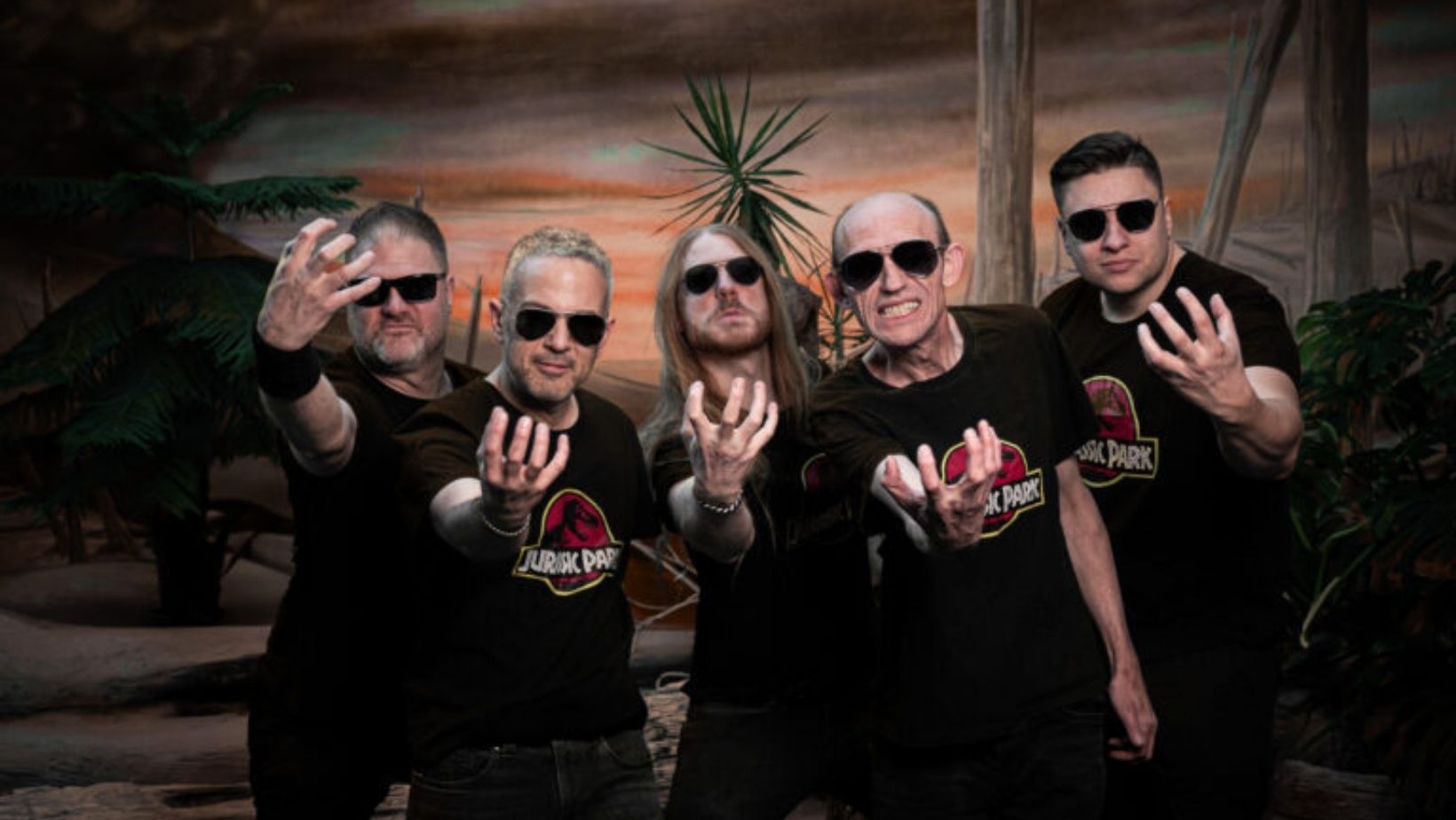
”Magma Ocean” immediately reveals the band’s aesthetic manifesto within seconds of opening the album. Rather than relying on a lengthy atmospheric introduction or the cinematic build-ups often found in modern productions, VORAX move straight into their central idea: heavy, expansive, and threatening guitar blocks. The guitar duo of Simon and Benj focuses less on technical display and more on the physical impact of the riffs.
The fundamental approach here is closely connected to the European Death Metal tradition of the late 1980s and early 1990s. However, instead of imitating the sound of a specific era, the band adopts the compositional logic of that period. The riffs are primarily built around repetition and weight; the pressure of the songs increases through the continuous development of short motifs. In this sense, VORAX deliberately distance themselves from the excessive note density and technical complexity often pursued in contemporary extreme metal.
Drummer Flavio’s performance is one of the key components of this approach. The drums do not sound like a perfectly aligned digital machine; instead, subtle differences in impact, fill choices, and natural dynamic shifts keep the songs alive. Particularly in the album’s heavier sections, this approach allows the riffs to be not only heard, but physically felt.
Beni’s vocals follow the same philosophy. Moving away from the heavily processed and layered vocal productions frequently heard in modern Death Metal, the band opts for a rawer and more human vocal character. Rather than relying on ultra-deep growls, Beni’s dark scream-driven approach recalls the traditions of classic European Death Metal. This choice increases the music’s aggression because the vocals do not function as a separate effect layer within the mix; they feel like an extension of the band’s overall physical presence.
One of the album’s greatest strengths is the way VORAX rely on rhythmic pressure rather than speed. “Devouring Raw Flesh” is one of the strongest examples of this approach. Although the track possesses a more dynamic structure, the band’s fundamental character remains unchanged: they do not speed up simply to be fast; they alter the tempo to increase the impact of the riffs.
The song’s guitar structure combines constantly driving rhythmic figures with brief moments of restraint. These transitions give the track a classic hunting sensation; rather than feeling like a direct attack, the music creates the atmosphere of a pursuit where positions are constantly shifting. This is where the fundamental approach VORAX inherit from bands like Bolt Thrower becomes apparent: heaviness is not created solely through slowness, but through the way the riffs move.
Frugi’s bass performance is also particularly noticeable here. While bass guitar often remains hidden beneath the guitars in many Death Metal productions, it takes on a distinct role throughout Volcano Shock. Although it frequently follows the same movement as the guitars, the clarity of its tone adds additional depth to the low end. Especially when the guitars break away during lead sections, the bass maintains the structural backbone of the songs.
“Hunter Killer” represents the more dynamic side of the album. The more frequently shifting drum patterns, more aggressive guitar transitions, and increased tension in the vocal performance add additional energy to the track. However, VORAX once again avoid leaning into technical excess. The song’s impact comes not from complicated arrangements, but from well-timed changes in pace.
One of the album’s most striking qualities is that VORAX do not use slower tempos simply as a synonym for sluggishness. The title track, Volcano Shock, is the clearest example of this. Instead of creating the expected continuously accelerating “eruption,” the band chooses a structure that gradually increases pressure. The more controlled vocal delivery at the beginning of the track and the wide-ranging guitar movements make the later, heavier sections hit with greater force. This approach translates the volcano metaphor directly into the musical structure: the focus is not the explosion itself, but the tension building before it.
Although the heavy, rolling movement of the guitars occasionally recalls the approaches of bands such as Bolt Thrower and Asphyx, VORAX are not simply reproducing genre references. The band uses these influences within its own compositional framework. Flavio’s drum arrangements, in particular, prevent the repeating riffs from becoming monotonous. Short marching rhythms and controlled transitions help the track continue to develop.
A similar approach becomes even more apparent on “Reign Supreme.” The song succeeds through its use of space rather than speed. The expansive nature of the guitars and the heavy emphasis of the drums transform the track into something almost physical. Beni’s vocals function as a rhythmic element here; the alignment of words with the impact of the instruments strengthens the connection between voice and arrangement.
VORAX’s music largely remains within the boundaries of classic Death Metal, but the band occasionally creates small openings beyond that framework. “Flight of the Pteranodon” is the most successful example of this. Compared to the rest of the album, the track adopts a broader compositional approach. While the core riff structure remains heavy and dark, guitar solos and melodic lines are given more space. The melodic elements here do not move away from Death Metal; instead, they expand the existing atmosphere.
This point is significant because many extreme metal bands today attempt to broaden their sound through different instruments, atmospheric layers, or genre-crossing elements. VORAX choose a more traditional method: creating small contrasts within the same guitar-and-drum language. This approach may not be innovative, but it preserves the album’s cohesion. The way the melodic guitars rise above the rhythmic foundation shows that the band is not defined solely by heavy riffs. However, developing this side further could become an element that makes VORAX’s identity even more distinctive in the future.
One of the defining characteristics of Volcano Shock is its production approach. The band recorded the album largely using restored equipment from the 1980s and 1990s, while maintaining an analog philosophy throughout the mixing and mastering processes. However, the important point here is that analog recording is not automatically a sign of quality on its own. Using old equipment does not guarantee a more organic or superior result. VORAX’s choice gains meaning because it aligns with the structure of the music.
The guitar tones are dirty yet defined. The drums do not carry a plastic triggered feel; instead, natural movement is preserved, particularly in the snare, toms, and cymbals. The audible presence of the bass guitar also supports this approach. The result feels less like a recording built from individually edited digital layers and more like a band performing together in the same room.
That said, the production does have certain limitations. During denser sections, separating the guitars from one another can occasionally become difficult, and some tracks begin to approach each other due to their similar tonal palette. This is especially noticeable in the middle portion of the album. Nevertheless, these imperfections can be viewed as natural consequences of the chosen aesthetic. VORAX are not aiming for flawless polish; they are aiming for controlled rawness. The band largely succeeds in maintaining that balance.
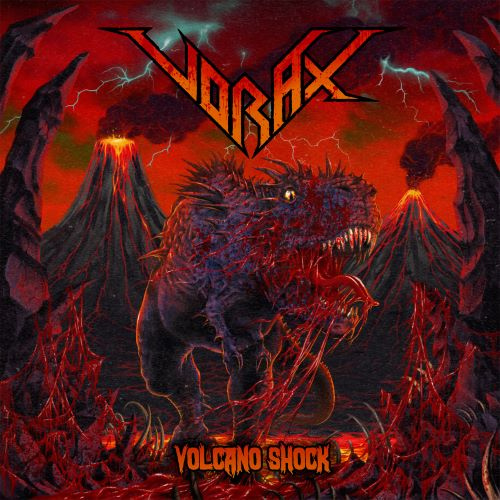
The album’s visual identity also runs parallel to its musical approach. The cover artwork embraces a classic Death Metal aesthetic that directly reflects the scale and threat of the prehistoric world. The purpose is not merely to create a nostalgic appearance, but to establish the atmosphere awaiting the listener before the first note even begins. While themes of dinosaurs, volcanoes, and mass extinction could easily drift into caricature, VORAX balance them with musical heaviness. The band presents the prehistoric world not as a playful backdrop, but as a merciless environment.
The greatest advantage of this concept is that it separates the band from the familiar Death Metal imagery of graveyards, blood, and bodily horror used by many acts within the genre. However, musically the band still operates within traditional boundaries. Therefore, the concept does not completely transform the sound; instead, it functions as a framework that gives the existing Death Metal approach a stronger identity.
Volcano Shock is an album that demonstrates Old School Death Metal can still work in the modern era, while attempting to achieve this without simply recreating the past. VORAX’s strength does not lie in creating a new genre, but in using the fundamental tools of classic Death Metal effectively.
The album chooses riff weight over technical showmanship, the feeling of live performance over flawless digital editing, and an organic recording philosophy over modern production trends. While this approach may occasionally create a sense of repetition due to the limitations of the style itself, the band’s strength lies in understanding how to move within these boundaries with control.
The album demands that listeners pay attention not through immediate consumption, but through the structure of the riffs, the interaction between drums and bass, and the small differences in arrangement. VORAX do not propose a revolutionary direction within contemporary extreme metal; instead, they argue that Old School Death Metal remains a living, breathing form with genuine physical impact. The album’s true achievement lies here: rather than presenting the past as a museum artifact, it presents it as an organism that is still moving within today’s scene.
OZAN