ALBUM REVIEW
STREET JUSTICE – Rules Are For Suckers
Sleazy melodies meet classic heavy metal.
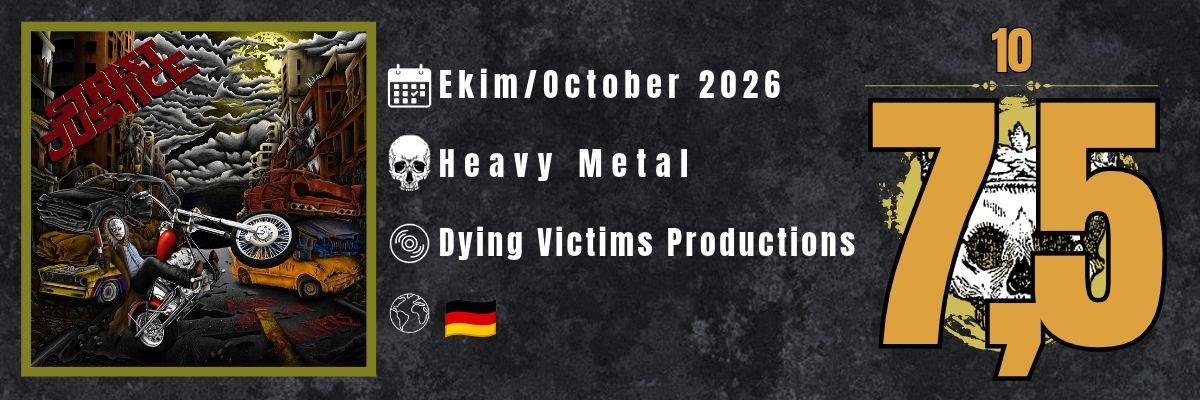
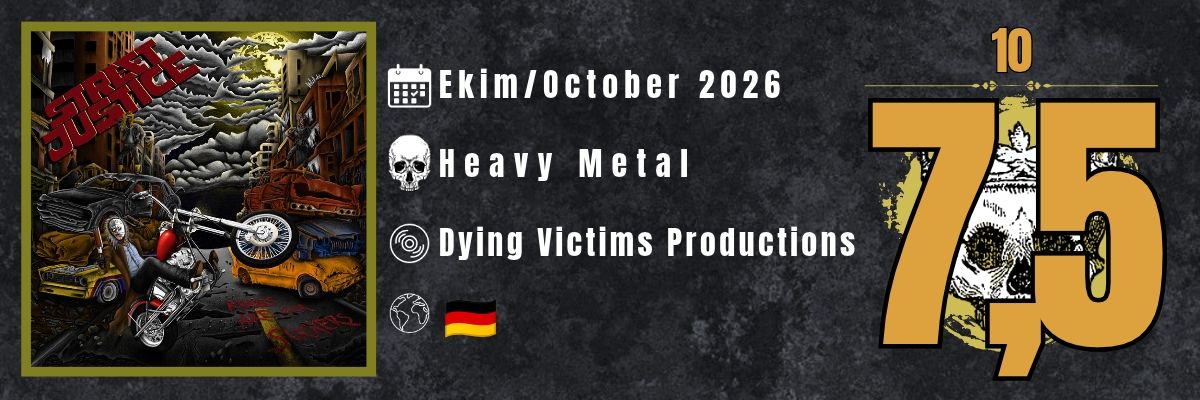
The reunion of two former members of SAVAGE under the STREET JUSTICE banner following the release of 2023's "Glory Riders" came about through a shared desire to keep the spirit of 1980s heavy metal alive. Recorded by Pawel Nemkovic and Axel Warrior alongside new drummer Marcel Riedel, "Rules Are For Suckers" brings together the flamboyant side of Los Angeles glam metal and a harder heavy metal edge across its nine tracks. While the influence of W.A.S.P., TWISTED SISTER, QUIET RIOT and early VAN HALEN is readily apparent, L.A. GUNS' dirtier, sleaze-driven approach is another key reference point in shaping the album's overall character.
To understand STREET JUSTICE's musical identity, it's worth looking at the interplay between the melodic approach of the guitars and Pawel Nemkovic's vocal style. His slightly rough-edged voice, occasionally reaching into a higher register, balances the melodic and flamboyant aspects of the songs while preventing the music from drifting too far into hard rock territory. The guitars, meanwhile, build on the powerful chord structures of classic heavy metal, adding memorable melodies, brief lead passages and flashy solos. The interplay between Nemkovic and Warrior's guitar work creates a sense of momentum that becomes particularly apparent as the songs move towards their choruses. With both musicians also handling bass duties, the album's instrumental foundation clearly revolves around this duo.

Opening track 'S.C.R.E.W.' is a good example of this approach. Its flanger-enhanced guitar intro immediately recalls the sound of sleaze metal recordings from the era, before the driving rhythm guitars and Tobias Kasper's straightforward yet energetic drumming establish the pace. 'Lethal Strike' and 'One Of The Living' also rely on memorable melodies and traditional verse-chorus structures. The latter, in particular, is one of the more interesting choices on the album, being a cover of TINA TURNER's song famously associated with Mad Max Beyond Thunderdome. STREET JUSTICE pushes the original's pop sensibilities into the background, reshaping it around heavier guitars. Nemkovic's decision to begin in a lower register before climbing towards the chorus gives the performance a different dynamic. The bass passage midway through the track and the guitar solo that gradually gathers momentum are further highlights of the arrangement.
The remaining tracks reveal different facets of the band's relationship with the traditions of 1980s heavy metal and hard rock. 'Call Of The Gypsy' combines acoustic guitar touches with driving electric guitar rhythms to create a more theatrical atmosphere. Some of its transitions recall the melodic sensibilities of classic IRON MAIDEN, and their combination with the influence of W.A.S.P. broadens the track's musical scope. 'Tokyo Subway Molester', on the other hand, follows a more straightforward heavy metal path, built around mid-paced, ACCEPT-inspired riffs and backing gang vocals. The interplay between Nemkovic's voice and the guitars produces an easily accessible chorus, despite the track's rather sinister title.
The number of tracks approaching the five-minute mark occasionally exposes the album's reliance on a familiar songwriting formula. On songs such as 'This Is My Boomstick (Pt I)' and 'Under My Wheels', the transitions between melodic riffs, rhythm guitar backing and vocal sections follow a well-established pattern. While this approach makes the material accessible, it also limits the structural differences between individual tracks. Guitar solos and melodic variations bring movement to the arrangements, but there is little in the way of genuine experimentation across the album as a whole. 'This Time – But For Real (But For Real)' leans more heavily into the QUIET RIOT and TWISTED SISTER tradition, with its snare-and-kick-driven opening, increasingly high-pitched vocal delivery and rhythmic guitar work. Closing track 'Gutter Cat Love' completes the picture with layered vocals, flamboyant guitar runs and lyrics that fit neatly into the sleaze metal aesthetic.
The production is another important element in supporting STREET JUSTICE's period influences. Shaped through the technical collaboration of Sergej Dukart from TYRAN, the sound retains the character of old-school heavy metal recordings while offering enough clarity to keep the instruments distinct. The expansive guitar placement and balanced positioning of the rhythm section give the album a substantial sound. Rather than simply reproducing the recording aesthetics of the past, the approach here is to recreate the broad, larger-than-life sound of 1980s heavy metal with a degree of modern clarity.
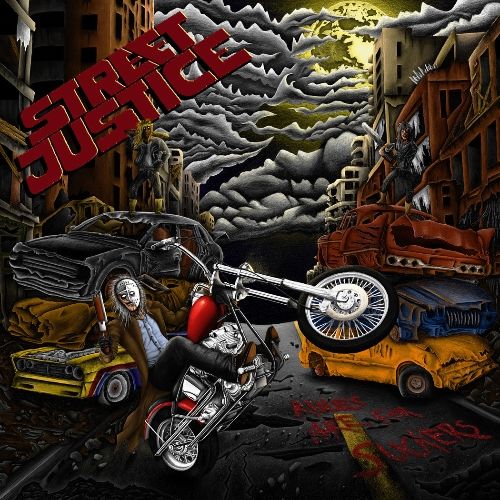
Where "Rules Are For Suckers" shows its limitations most clearly is in its tendency to reuse the musical formulas of its influences rather than reinterpret them within its own sound. The connections to W.A.S.P., L.A. GUNS and TWISTED SISTER go beyond superficial similarities; their influence is clearly audible in the melodic guitar arrangements, vocal approach and construction of the choruses. That said, it would be unfair to suggest that STREET JUSTICE completely loses its own musical identity in bringing these references together. The combination of sleaze metal's flamboyant, occasionally cheeky character with the harder guitar approach of classic heavy metal gives the album a coherent direction. While it offers limited appeal to listeners looking for something genuinely innovative, it makes for an enjoyable listen for those who miss the traditions of 1980s American heavy metal and sleaze metal. If STREET JUSTICE can bring the same level of care to refining its execution of these old-school formulas in the present day – the album artwork is an excellent example of what the band is capable of – the band could take some significant positive steps forward in its career.