
ALBUM REVIEW
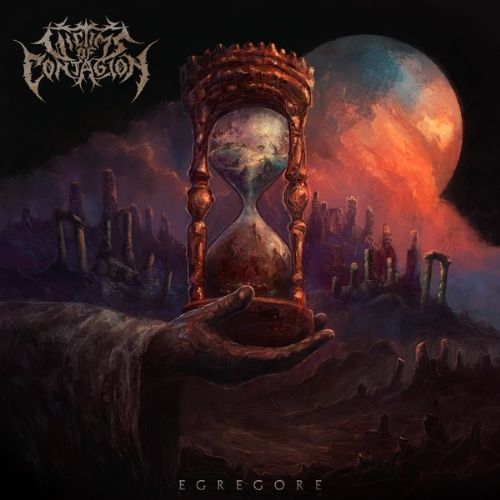
VICTIMS OF CONTAGION - Egregore
Technical death metal reshaped through progressive structures.
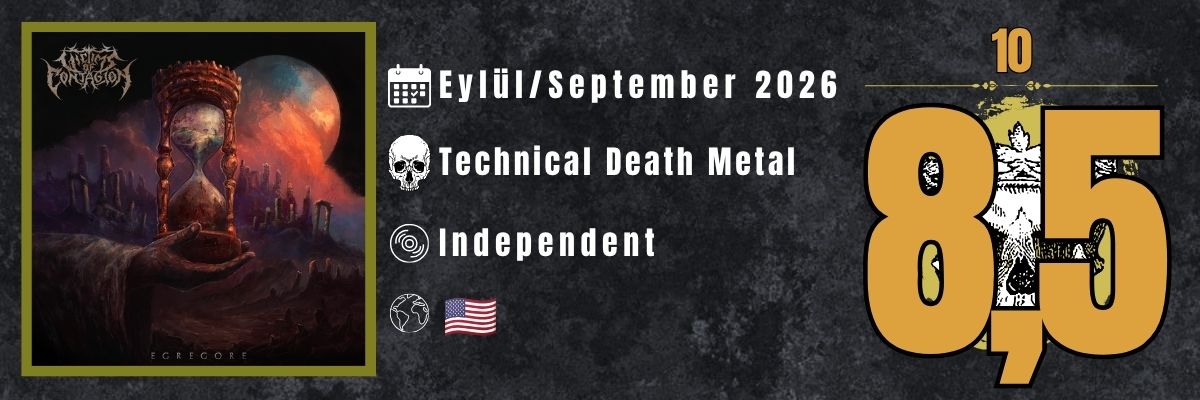
Delving deep into the underground scene and discovering new gems has always fascinated me. Perhaps the most exciting scene in this regard is the US death metal scene. After an almost seven-year hiatus, VICTIMS OF CONTAGION are reviving a sound that was on the verge of being forgotten. At first glance, “Egregore” appears to be a record that expands the usual showcase of technical death metal. The trajectory established by the Pittsburgh-based band’s 2014 EP “Parasitic Unborn” and 2019 album “Lamentations of the Flesh Bound” evolves here into something more progressive, denser, and more expansive in its songwriting. Across seven tracks, the record seeks to connect different musical ideas within the same compositions rather than treating complexity as an end in itself.
The first thing that stands out is the rhythmic density. Accelerated tempos, polyrhythmic arrangements, and blast beat-driven passages constantly shift the songs’ sense of motion, while heavier grooves provide a clear counterweight to the high-speed sections. As a result, the album never becomes a continuous technical showcase. The heavy riffs that follow bursts of speed restore the physical weight of the compositions, while in certain sections, a sense of repetition and looping gives the music’s technical side a more mechanical character. These transitions are important because VICTIMS OF CONTAGION do not simply keep increasing the complexity; instead, they distribute the intensity across different rhythmic scales.
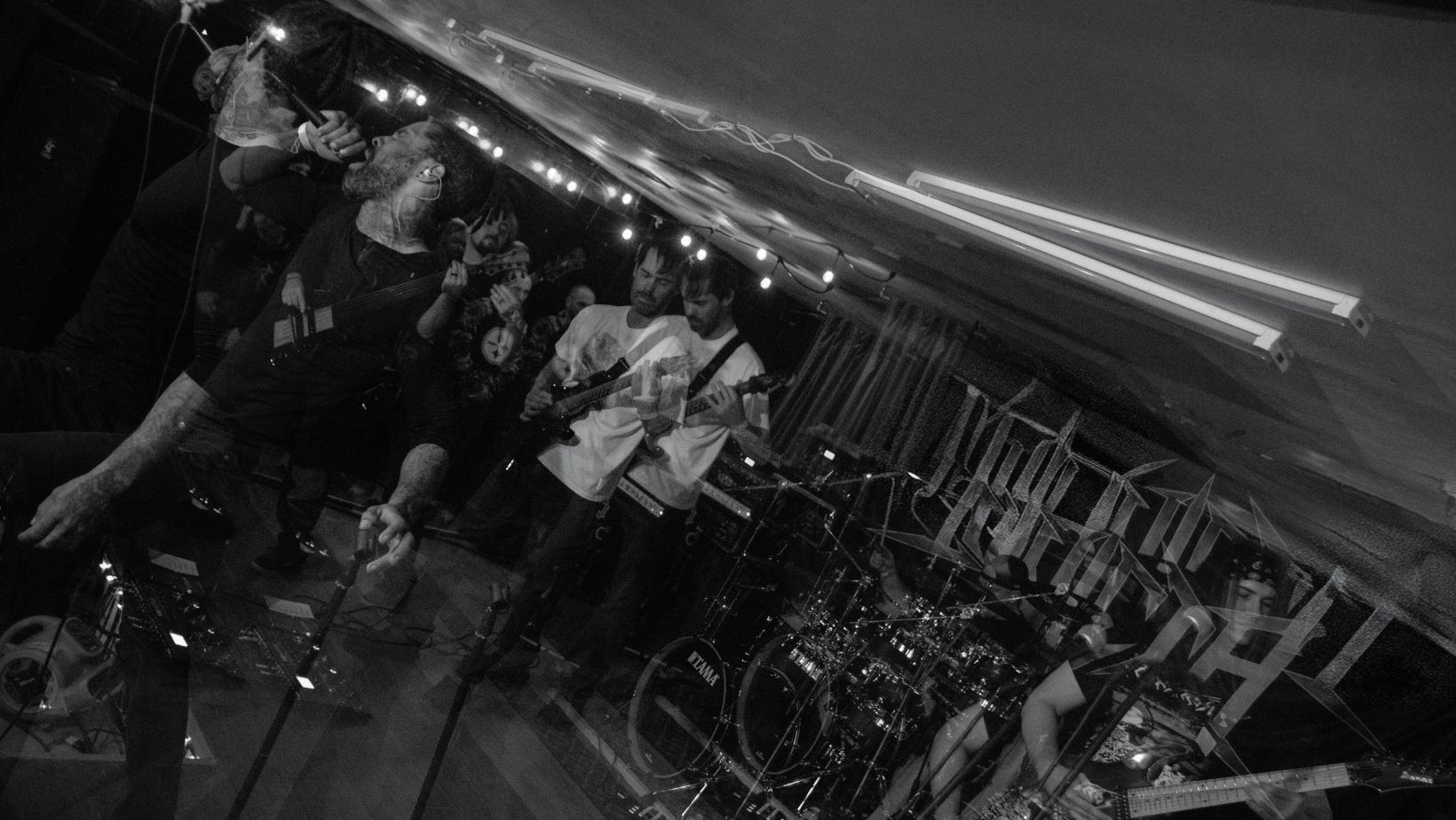
The guitars are the real driving force behind this structure. The twin-guitar setup built by Chuck Forsythe and Anthony Zello brings neoclassical precision, icy tremolo passages, fragmented palm-muted sections, technical solos, and complementary layers of riffs to the forefront. The direct aggression of old-school death metal has not disappeared; the connection to foundational acts such as DEATH, SUFFOCATION, GORGUTS, and ATHEIST can be felt particularly in the sharpness of the riffs and the high level of instrumental discipline within the compositions. But rather than simply reproducing that legacy, “Egregore” builds progressive and polyrhythmic layers on top of it. The introduction of thrash- and black metal-influenced passages in certain sections also shows that the guitars are being used not merely to increase technical density, but to alter the album’s tonal and rhythmic direction.
With a structure that changes musical ideas so frequently, it would be easy for melody to get lost. One of VICTIMS OF CONTAGION’s more successful qualities is that they do not constantly pit technical detail against melodic memorability. As new riffs are layered over existing ones, counterpoint, solos, and atmospheric passages enter the picture, yet the compositions never become purely abstract exercises. The acoustic passages that appear here and there also serve a purpose beyond acting as decorative interludes to break up the intensity. Particularly when considered alongside the heavier grooves, they provide breathing space within the album’s continually escalating technical momentum.
Chris Edison’s vocals likewise function as more than a conventional death metal layer over these dense compositions. Moving between guttural vocals and high-pitched screams, his performance creates different textures without ever resorting to clean singing. The fact that the vocal lines sometimes behave almost like part of the instrumentation becomes particularly important in sections where the guitars and drums are in constant motion. The vocals therefore do not simply reinforce the intensity; they further shape it.
The attention to detail is equally apparent in the album’s production and performance. The drums’ ability to carry the polyrhythmic arrangements, the bass retaining its function within the dense guitar textures, and the guitars remaining sufficiently distinct for their technical details to be heard without completely masking one another are all crucial to keeping compositions of this scale intelligible. The meticulous recording and arrangement process emphasized in the label’s material is reflected in the music itself: the complexity here does not come from randomly piling sections on top of one another, but from using different ideas in a controlled manner within the same composition.
Still, not all of “Egregore”’s appeal comes from accessibility. The sheer number of riffs, frequent tempo changes, polyrhythmic structures, and constantly moving guitars make this an album that does not reveal itself easily on the first listen. Yet that density never turns the record into an entirely impenetrable structure, thanks to the melodic and rhythmic connections within the compositions themselves. On the contrary, with repeated listens, it becomes increasingly clear how passages that initially seem disconnected are positioned within the same compositional logic.
In this respect, “Egregore” does not abandon the technical death metal legacy of VICTIMS OF CONTAGION’s past; it places that legacy within a broader progressive framework. Old-school aggression, neoclassical guitar discipline, blackened tremolo passages, groove, and polyrhythmic songwriting can all function within the same album without cancelling one another out. In turn, the music becomes something that demands exploration of its details rather than a technical death metal showcase designed for easy consumption. Maintaining this level of intensity across all seven tracks is the album’s most significant compositional achievement. “Egregore” demonstrates why VICTIMS OF CONTAGION should not be viewed today merely as a continuation of old-school technical death metal: they use technicality not as a display piece, but as a means of multiplying the relationships between riff, rhythm, melody, and atmosphere.
